

Introduction
Age spots are one of the most common and frustrating signs of sun exposure and time. They often appear gradually, first as faint, uneven patches, then as more noticeable brown or grey-brown marks that stand out against surrounding skin. Many people notice them on the face, backs of the hands, forearms, shoulders and chest, especially after years of intermittent high UV exposure such as holidays, outdoor hobbies, or simply commuting and daily life.
Despite the name, age spots are not caused by ageing alone. They are closely linked to cumulative ultraviolet exposure that triggers melanocytes, the pigment-producing cells, to create extra melanin in localised areas. Over time, those pigment “hot spots” become visible on the surface. Genetics, skin tone, and how reliably you protect your skin all influence whether they develop and how prominent they become.
The good news is that age spots are usually harmless and there are several evidence-based ways to fade them. The better news is that the best results often come from a combination of smart daily habits, consistent topical skincare, and targeted in-clinic procedures when appropriate. Understanding what age spots are, how to distinguish them from other skin changes, and how treatments work helps you make safer choices and avoid wasting money on products that cannot realistically deliver the outcome you want.
What Age Spots Are and Why They Develop
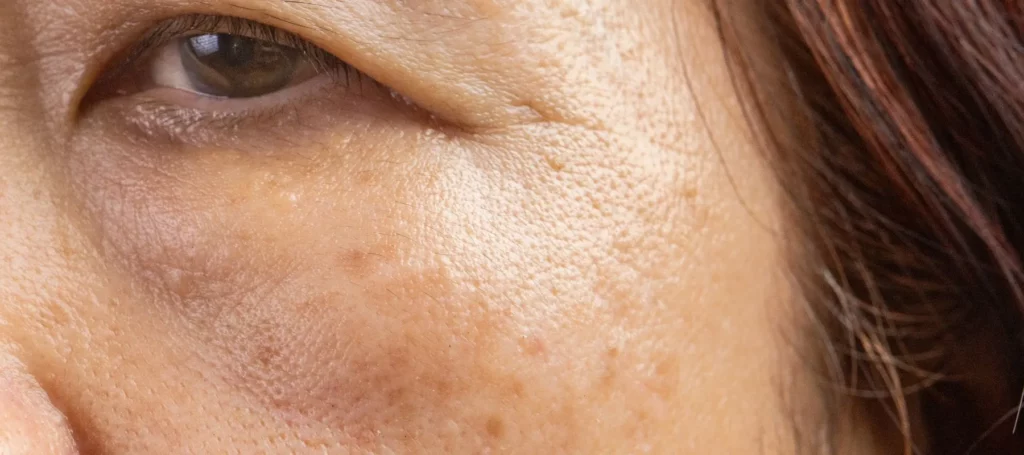
Age spots, also called solar lentigines, are flat areas of increased pigmentation that develop after repeated exposure to ultraviolet light. They are not raised, not inflamed, and typically range from light tan to dark brown. Their borders can be sharply defined or slightly blurred, and they can appear as a single patch or multiple scattered spots.
The underlying process is driven by UV radiation, which stimulates melanocytes to produce melanin as a defence mechanism. With repeated exposure, melanin production can become uneven, creating clusters of pigment. In addition, UV contributes to oxidative stress and low-grade inflammation in the skin, both of which can make pigment more persistent. As skin ages, cell turnover can slow down, meaning pigmented cells may linger longer before being shed. This is one reason age spots can become more visible in midlife, even if the sun exposure happened years earlier.
Several factors increase risk and severity. Skin that burns easily tends to develop visible sun damage sooner, but age spots can affect any skin tone. Genetics play a role in how reactive melanocytes are and how the skin handles UV stress. Hormonal factors can influence pigmentation too, although classic age spots are primarily sun-driven rather than purely hormonal. Certain medications and skincare ingredients can increase photosensitivity, raising the chance of new pigmentation if sun protection is inconsistent.
Common locations reflect patterns of sun exposure. The face is exposed daily, even on cloudy days. Hands and forearms receive UV while driving and walking. The upper chest and shoulders can be affected after repeated outdoor activities. Where UV levels vary throughout the year, people can underestimate exposure on bright but cool days, leading to gradual accumulation.
Age spots are benign and do not turn into skin cancer. However, sun exposure is also the main risk factor for skin cancers, which is why identifying what you are seeing and monitoring for change is important.
How to Tell Age Spots Apart From Other Skin Changes and When to Seek Medical Advice
Age spots can look similar to other pigmented lesions, so it is worth knowing the usual features and the red flags that suggest a medical review. Typical age spots are flat, smooth, evenly coloured, and slowly developing. They often appear in sun-exposed areas in clusters and may become more noticeable after summer.
Freckles are usually smaller, appear earlier in life, and can fade in winter, while age spots tend to persist. Post-inflammatory hyperpigmentation occurs after inflammation such as acne, eczema, or a burn, and often matches the pattern of the prior irritation. Melasma usually shows larger, symmetrical patches on the cheeks, forehead, or upper lip, and is strongly influenced by hormones and visible light as well as UV. Seborrhoeic keratoses can look like age spots from a distance but often have a “stuck-on”, waxy, or slightly raised texture. Moles can be flat or raised and may be present from childhood or develop later.
Because some skin cancers can mimic benign pigmentation, seek medical advice if a spot changes quickly, becomes raised, crusted, painful, itchy, bleeds, or develops irregular borders or multiple colours. A useful guide is the ABCDE approach for melanoma warning signs: asymmetry, border irregularity, colour variation, diameter that is enlarging, and evolution over time. Not every concerning lesion fits these rules, so trust patterns of change. If you notice a new dark mark that appears rapidly, a long-standing spot that changes, or anything that looks different from your other marks, arrange a GP appointment or a dermatology assessment with Shumaila’s.
It is also sensible to get a professional opinion before starting strong lightening agents or booking laser treatment, particularly if you have a history of keloid scarring, significant sensitivity, or a tendency to hyperpigment after minor irritation. Some pigment conditions require a different approach, and treating the wrong diagnosis can worsen the appearance. A proper skin assessment can clarify whether the mark is an age spot, post-inflammatory hyperpigmentation, melasma, or something else, and can help plan safe treatment around your skin type and lifestyle.
Treatment Options: Topicals, Professional Procedures and At-Home Care
Treating age spots usually works best when you combine pigment reduction with prevention. No treatment can guarantee permanent removal if UV exposure continues without protection, but many approaches can significantly fade spots and even out overall tone.
Topical treatments are a common first step. Vitamin C can help reduce oxidative stress and interfere with pigment formation, and it can improve brightness when used consistently. Retinoids increase cell turnover and can gradually disperse pigment; they also support collagen, improving overall texture. Ingredients such as niacinamide, azelaic acid, kojic acid, arbutin, liquorice extract, and tranexamic acid can help regulate pigment pathways. Hydroquinone is a strong depigmenting agent and can be effective when used under medical guidance, usually in time-limited courses to reduce side effects. With topicals, expectations matter. Lightening tends to be gradual over several months, and irritation can trigger more pigmentation in reactive skin, so gentle use and barrier support are important.
Professional procedures can provide faster or more dramatic results. Chemical peels using acids such as glycolic, lactic, salicylic, or trichloroacetic acid remove layers of pigment and can improve tone, but depth and skin type must be chosen carefully to avoid complications. Laser and light-based treatments target pigment more directly. Certain lasers selectively break up melanin so the body can clear it, while IPL can help with mixed sun damage including diffuse redness and uneven pigment. Results depend on the type of pigmentation, the device used, and your skin’s response. Multiple sessions are often needed, and strict aftercare is essential. For some skin tones and pigment types, the wrong energy settings or insufficient sun avoidance can lead to post-inflammatory hyperpigmentation, so professional assessment and tailored parameters matter.
At-home care supports and protects results. Daily broad-spectrum sunscreen is non-negotiable, applied generously and reapplied when outdoors, especially in spring and summer when UV increases. A tinted sunscreen can add protection against visible light, which may help some pigment conditions. Gentle cleansing, consistent moisturising, and avoiding harsh scrubs reduce irritation-related pigmentation. If you use retinoids or exfoliating acids, introduce them slowly and avoid stacking too many actives at once. For hand spots, sunscreen on the backs of hands and driving gloves during long drives can make a visible difference over time. Treatment is rarely a single product or one session. It is a plan that balances effectiveness, tolerance, and prevention.
How to Get the Best Results and Reduce Recurrence
The best outcomes come from treating age spots as both a pigment problem and a UV-exposure pattern. Even the most effective procedure can be undermined by inconsistent sun protection, while good daily habits can dramatically extend results.
Start with prevention that fits real life. Use a broad-spectrum SPF every day on face, neck, chest, and hands. Many people skip SPF in colder months, but UVA is present year-round and contributes to pigmentation. Apply enough product to cover evenly, and reapply if you are outdoors, sweating, or rubbing the skin. Add physical barriers when possible: wide-brim hats, sunglasses, and clothing with good coverage for shoulders and chest during outdoor activities.
Build a routine that supports pigment control without irritation. Irritation is a major cause of rebound pigmentation, particularly after active skincare and procedures. A simple, consistent routine often beats an aggressive one. Consider a pigment-modulating serum in the morning paired with moisturiser and SPF, and a retinoid or gentle exfoliant at night on a schedule your skin can tolerate. If dryness, stinging, or peeling persists, reduce frequency and focus on barrier repair. Consistency over months is what shifts pigment.
Time treatments strategically. If you are planning professional procedures such as peels or laser, schedule them when you can minimise sun exposure afterward and follow aftercare closely. Avoid tanning or deliberate sun exposure. If you have a special event, plan well in advance. Some treatments cause temporary darkening as pigment is lifted, followed by gradual clearing, and skin can look worse before it looks better.
Track progress with photos. Lighting can make pigment look different day to day, so take consistent photos every few weeks to judge changes objectively. Also note any triggers, such as outdoor days without reapplication or new products that cause irritation.
Finally, manage expectations. Age spots may fade significantly, but complete removal is not always possible, especially if pigment extends deeper or if there is ongoing sun exposure. Maintenance is normal, whether that is continued topical use, periodic professional refreshers, or simply more diligent UV protection. The goal is clearer, more even-toned skin with minimal risk and minimal disruption, not a cycle of over-treating and recovering.
FAQs
What is the fastest way to get rid of age spots?
The fastest visible improvement usually comes from professional treatments that directly target pigment, such as certain laser treatments, IPL, or medium-depth chemical peels, depending on your skin type and the nature of the pigmentation. These methods can break up or lift pigment more quickly than topical skincare alone. However, “fastest” is not always “best” if it increases the risk of irritation or post-inflammatory hyperpigmentation. A safer approach is often a planned course: a professional assessment, a suitable in-clinic procedure, and supportive home care with strict sun protection. Many people need more than one session to achieve a clear change, and results continue to improve for weeks as the skin heals and clears pigment. Your daily SPF use heavily influences how long the improvement lasts.
Do age spots go away on their own?
Age spots usually do not disappear completely without treatment. Unlike freckles, which can fade when sun exposure decreases, age spots tend to be more persistent because pigment becomes established in the skin over time. They might lighten slightly if you become very consistent with sun protection and avoid further UV exposure, but most people find they remain visible. That said, preventing new spots and stopping existing ones from darkening is achievable and often makes a big difference in overall appearance. If you notice spots that are getting darker, increasing in number, or changing in shape, it is important to have them checked by a medical professional to confirm they are benign before focusing on cosmetic lightening.
Are age spots the same as sun damage or melasma?
Age spots are a type of sun damage, but not all sun damage is age spots. Sun damage includes a range of changes such as uneven tone, fine lines, rough texture, broken capillaries, and broader discolouration. Age spots are more localised patches of pigment. Melasma is different: it tends to form larger, symmetrical patches, often on the cheeks, forehead, or upper lip, and it is influenced by hormones and can be triggered by visible light as well as UV. Treatment plans differ. Age spots often respond well to pigment-targeting procedures and consistent SPF, while melasma typically needs a more cautious strategy focusing on long-term control, barrier support, and prevention of relapse. A professional assessment helps distinguish these conditions so you choose the right treatment.
Can I treat age spots at home with over-the-counter products?
Yes, mild to moderate age spots can often be improved at home, especially if you are consistent for at least 8 to 16 weeks. Look for ingredients that reduce pigment formation and support turnover, such as vitamin C, retinoids, niacinamide, azelaic acid, and gentle exfoliating acids. The most important “treatment” is daily broad-spectrum sunscreen, because without it, pigment will keep returning or darkening. The main risk with at-home treatment is irritation from overuse or mixing too many actives, which can lead to redness and sometimes more pigmentation. Introduce one active at a time, start with lower frequency, moisturise well, and stop if your skin becomes persistently sore or inflamed. If spots are very dark, widespread, or resistant, professional options may be more effective.
Are lasers safe for age spots and will they come back?
Laser and light-based treatments can be safe and effective for age spots when the device choice, settings, and aftercare are tailored to your skin and the specific pigmentation. The key risks include temporary redness, scabbing, and post-inflammatory hyperpigmentation, particularly if the skin is irritated or exposed to UV during healing. Whether spots come back depends less on the procedure and more on ongoing sun exposure and maintenance. If you continue to accumulate UV without reliable SPF, new spots can form and treated areas can darken again. Think of laser as resetting the visible pigment, while prevention determines how long the result lasts. Many people benefit from a maintenance plan that includes daily sun protection and periodic topical pigment control.
When should I worry that a dark spot is something more serious?
You should seek medical advice if a dark spot changes quickly, becomes raised, develops an irregular border, shows multiple colours, bleeds, crusts, ulcerates, or feels painful or persistently itchy. Also get checked if a spot looks noticeably different from your other marks or if a new dark lesion appears and grows over weeks to months. Age spots are usually stable and uniform, so evolution is the key concern. Because sun exposure increases the risk of skin cancer as well as benign pigmentation, it is wise to have suspicious changes assessed promptly by a GP or dermatologist at Shumaila’s. Cosmetic treatment should never replace medical evaluation of a concerning lesion.
Conclusion
Age spots are common, usually harmless patches of excess pigment that develop mainly due to cumulative UV exposure. They tend to appear on the face, hands, forearms and chest, and they often become more noticeable over time because pigment builds up and skin turnover slows. While they are benign, it is important to distinguish them from other skin changes and to seek medical advice for any mark that changes, bleeds, becomes irregular, or looks significantly different from others.
Treatment is most effective when you combine approaches. Topical ingredients can gradually fade spots and improve overall tone, professional procedures can accelerate results for more stubborn pigmentation, and careful at-home care protects the skin and reduces the risk of rebound pigmentation. Consistent broad-spectrum SPF is the foundation, not an optional add-on, because prevention determines whether your results last and whether new spots develop.
If you want a personalised plan based on your skin, your current pigmentation, and your tolerance for downtime, you can book a consultation with Shumailas in London or Essex.