

TL;DR: Successful ear surgery (otoplasty) requires 4-6 weeks of preparation including medical optimisation, practical arrangements, and mental readiness. Key steps: attend a thorough consultation, stop smoking 4 weeks before, arrange transport and aftercare, prepare your recovery space, and follow pre-surgery fasting instructions. Most patients return to work within one week, with final results visible after several months.
- Schedule a detailed consultation to discuss goals, examine ear structure, and understand the surgical technique
- Stop smoking 4 weeks before surgery and discontinue blood-thinning medications 2 weeks prior
- Arrange transport home and 24-hour supervision, as you cannot drive post-surgery
- Prepare your recovery space with elevated pillows, button-up shirts, soft foods, and ice packs
- Fast from midnight before surgery and arrive on time with ID, insurance details, and current medication list
You’ve made the decision to improve the appearance of your ears through otoplasty. The consultation is booked, and you’re ready to move forward.
But preparation makes the difference between a smooth experience and unnecessary stress.
This guide walks you through every stage of preparing for ear surgery, from your initial consultation to the day of your procedure. You’ll know exactly what to expect, what to arrange, and how to set yourself up for the best possible outcome.
What Happens During Your Ear Surgery Consultation?
Your consultation establishes the foundation for successful otoplasty.
Bring specific concerns about your ears and photographs showing your desired appearance. Clear communication helps your surgeon understand your goals.
During the consultation, your surgeon will:
- Examine your ear structure and facial proportions
- Discuss realistic outcomes based on your anatomy
- Explain the surgical technique recommended for your case
- Review potential risks and complications
- Answer your questions about recovery and results
Write down your questions beforehand. You’ll remember to ask everything important.
Ask about your surgeon’s otoplasty experience specifically. Request before-and-after photographs of patients with similar concerns. Verify qualifications and memberships with recognised medical bodies such as the General Medical Council (GMC) or the British Association of Aesthetic Plastic Surgeons (BAAPS).
Bottom Line: A thorough consultation with an experienced surgeon sets realistic expectations and builds trust before your procedure.
How Do You Prepare Your Body for Ear Surgery?
Optimal physical health improves surgical outcomes and recovery.
Four weeks before surgery:
Stop smoking completely because nicotine constricts blood vessels and impairs healing. This is non-negotiable for best results.
Review all medications and supplements with your surgeon because some increase bleeding risk. Common examples include aspirin, ibuprofen, vitamin E, and fish oil—these typically need to be stopped.
Your surgeon may request blood tests or other medical assessments depending on your age and health history. Complete these promptly.
Two weeks before surgery:
Avoid alcohol because it thins blood and increases bruising.
Eat a balanced diet rich in protein and vitamins because proper nutrition supports effective healing.
In Summary: Stop smoking 4 weeks before surgery, discontinue blood-thinning medications 2 weeks prior, avoid alcohol, and maintain excellent nutrition to optimise healing.
Arrange time off work or school. Most people need one week minimum, though you may feel ready sooner.
What Practical Arrangements Are Needed Before Surgery?
Organised logistics ensure a smooth surgery day and recovery.
Transport:
You cannot drive yourself home after surgery. Therefore, arrange for a responsible adult to collect you and stay with you for at least 24 hours.
Home environment:
Prepare your recovery space before surgery so everything is within easy reach.
- Stock up on easy-to-prepare meals
- Buy soft foods that don’t require much chewing
- Get extra pillows to keep your head elevated
- Purchase button-up shirts to avoid pulling clothing over your ears
- Fill any prescriptions your surgeon provides in advance
Set up a comfortable recovery area with entertainment options. You’ll need to rest but won’t necessarily sleep all day.
Childcare and pet care:
Arrange help if you have young children or pets because you’ll need to avoid bending, lifting, and strenuous activity initially.
Quick Recap: Secure transport home, prepare a comfortable recovery space with supplies, and arrange childcare or pet care for the first few days.
What Should You Do the Week Before Ear Surgery?
Final preparations ensure you’re completely ready.
Confirm all details with the clinic:
- Arrival time
- Fasting requirements
- What to bring
- Payment arrangements
Most otoplasty procedures require fasting from midnight the night before. Follow these instructions precisely to avoid surgical delays.
Prepare your recovery kit:
- Ice packs or frozen peas (wrapped in a clean cloth)
- Paracetamol or prescribed pain relief
- Antibacterial soap for gentle washing
- Clean towels and pillowcases
- A soft headband (your surgeon may provide this)
Wash your hair the night before surgery because you won’t be able to wash it normally for several days afterwards.
Key Reminder: Confirm clinic details, fast from midnight, prepare your recovery kit, and wash your hair the evening before your procedure.
How Do You Prepare the Night Before Your Procedure?
Get a good night’s sleep. Your body heals better when well-rested.
Remove all jewellery, including earrings. Take off nail polish if you’re having general anaesthetic.
Lay out comfortable, loose-fitting clothing for the next day. Choose a button-up shirt or zip-up top.
Double-check you have identification, insurance information, and payment method ready.
Essential Step: Rest well, remove all jewellery and nail polish, and lay out comfortable button-up clothing for surgery day.
What Do You Need on Surgery Day Morning?
Shower using antibacterial soap. Don’t apply any lotions, makeup, or hair products.
Wear comfortable, loose clothing. Leave valuables at home.
Arrive at the clinic at your scheduled time. Being late creates unnecessary stress and may delay your procedure.
Bring with you:
- Photo identification
- Insurance details and payment method
- A list of current medications
- Your phone and charger
- Something to read whilst waiting
Don’t bring anything you can’t afford to lose.
Critical Point: Shower with antibacterial soap, wear loose button-up clothing, and arrive on time with essential documents and your medication list.
What Happens During the Ear Surgery Procedure?
Understanding the process reduces anxiety.
You’ll meet with your surgeon again to confirm the surgical plan. They’ll mark your ears and answer any last-minute questions.
The anaesthetist will explain the sedation or anaesthetic process. Most ear reshaping procedures use local anaesthetic with sedation for adults, whilst children typically receive general anaesthetic.
The surgery typically takes one to two hours. The surgeon makes incisions behind your ears, reshapes the cartilage, and repositions your ears closer to your head if needed.
You’ll wake up with bandages around your head and possibly drainage tubes. This is normal.
What to Expect: The procedure takes 1-2 hours under local anaesthetic with sedation, involves incisions behind the ears, and you’ll wake with protective bandages in place.
What Is Immediate Post-Surgery Care?
You’ll spend time in recovery whilst the anaesthetic wears off. The nursing staff monitors your vital signs and comfort level.
Expect some discomfort, but severe pain is unusual. Tell the staff if you experience significant pain.
Once you’re alert and stable, you can go home with your designated adult. Follow all discharge instructions carefully.
First 24 hours at home:
- Rest with your head elevated
- Take pain medication as prescribed
- Apply ice packs to reduce swelling
- Avoid touching or bumping your ears
- Don’t remove bandages unless instructed
Someone should check on you regularly during the first night.
First Day Protocol: Rest with elevated head, take prescribed pain medication, apply ice packs, and have someone monitor you during the first 24 hours.
What Results Can You Realistically Expect?
Your ears will look swollen and bruised initially. This is normal and temporary.
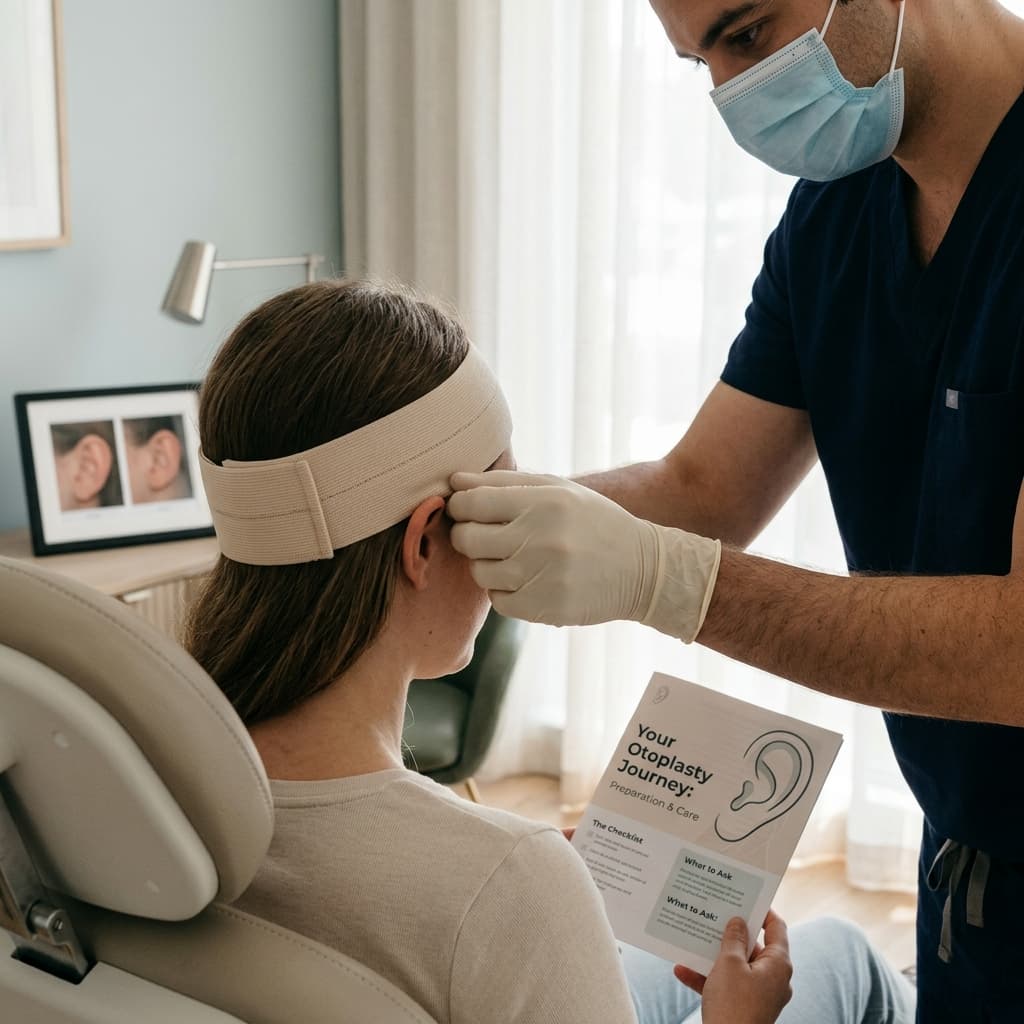
You’ll wear a protective headband for several weeks to support healing. Wear it as directed, even when sleeping.
Most people return to work within one week. Strenuous exercise needs to wait four to six weeks.
Final results become apparent after several months once all swelling subsides. The new ear position is permanent.
Timeline Reality: Expect initial swelling and bruising, wear a protective headband for weeks, return to work within one week, and wait several months for final results.
What Questions Should You Ask Your Surgeon?
Don’t leave your consultation with unanswered questions.
Essential questions include:
- What specific technique will you use for my case?
- How many otoplasty procedures have you performed?
- What are the most common complications, and how are they managed?
- When will I see final results?
- What happens if I’m not satisfied with the outcome?
- How do I contact you if problems arise after surgery?
A good surgeon welcomes questions and provides clear, honest answers.
Why This Matters: Asking about surgical technique, experience, complications, results timeline, and post-surgery support ensures you choose the right surgeon and understand your journey.
How Do You Handle Financial and Administrative Preparation?
Understand all costs before committing to surgery.
Ask for a detailed breakdown including surgeon’s fees, anaesthetist fees, facility costs, and follow-up appointments. Check whether revision surgery is included if needed.
Verify payment methods accepted and payment schedules. Some clinics offer financing options.
If you have medical insurance, check whether otoplasty is covered. Most insurers consider it cosmetic unless the surgery corrects a congenital deformity or injury.
Financial Clarity: Request a detailed cost breakdown, verify payment methods and schedules, explore financing options, and check insurance coverage before committing.
How Do You Prepare Mentally and Emotionally?
Surgery affects you emotionally as well as physically.
Be clear about why you want this procedure. Your motivation should come from within, not from pressure from others.
Understand that results take time to appreciate fully. Initial swelling and bruising can be discouraging. Trust the process.
Prepare for temporary lifestyle adjustments during recovery because you’ll need patience with restrictions on activities you normally enjoy.
Emotional Readiness: Ensure your motivation is internal, understand that results develop gradually, and prepare for temporary lifestyle restrictions during healing.
Ready to Take the Next Step
Proper preparation transforms your surgical experience from stressful to manageable.
You now know exactly what to arrange, what to expect, and how to optimise your outcome. The checklist approach removes uncertainty and puts you in control.
Book your consultation with a qualified surgeon who specialises in otoplasty. Discuss your specific concerns and goals. Get clear answers to all your questions.
The investment in proper preparation pays dividends in smoother recovery and better results. Take each step seriously, and you’ll set yourself up for success.
Frequently Asked Questions About Ear Surgery Preparation
How long before ear surgery should I stop smoking?
Stop smoking at least 4 weeks before your otoplasty procedure. Nicotine constricts blood vessels and significantly impairs healing, therefore quitting is essential for optimal results. If you cannot quit permanently, avoid smoking for 4 weeks before and 2 weeks after surgery.
Can I drive myself home after ear surgery?
No, you cannot drive yourself home after otoplasty. The procedure involves anaesthetic or sedation, which impairs your ability to drive safely. You must arrange for a responsible adult to collect you and ideally stay with you for 24 hours post-surgery.
What should I wear on the day of ear surgery?
Wear comfortable, loose-fitting button-up shirts or zip-up tops on surgery day. Avoid pullover clothing because you’ll need to dress without pulling fabric over your ears post-procedure. Do not wear jewellery, makeup, hair products, or nail polish if receiving general anaesthetic.
How much time off work do I need for ear surgery recovery?
Most patients need one week off work following otoplasty. However, recovery varies by individual and job type. If your work involves physical activity or potential ear contact, you may need additional time. Discuss your specific situation with your surgeon.
When can I wash my hair after ear surgery?
Wash your hair the night before surgery because you typically cannot wash it normally for 5-7 days afterwards. Your surgeon will provide specific washing instructions during recovery, often involving careful cleaning around bandages and avoiding direct water pressure on the ears.
Is ear surgery painful?
Most patients experience mild to moderate discomfort rather than severe pain after otoplasty. Your surgeon will prescribe pain medication to manage discomfort during the first few days. If you experience significant pain, contact your surgeon immediately because this may indicate complications.
How long do I need to wear the headband after ear surgery?
You’ll typically wear a protective headband for 4-6 weeks following otoplasty, including during sleep. The headband supports healing and maintains the new ear position. Your surgeon will provide specific guidance based on your healing progress.
What foods should I prepare for ear surgery recovery?
Prepare soft, easy-to-eat foods that don’t require extensive chewing. Good options include soups, smoothies, yoghurt, mashed potatoes, pasta, scrambled eggs, and soft fruits. Avoid crunchy or chewy foods initially because jaw movement can affect ear comfort during early recovery.
Key Takeaways
- Start early: Begin preparation 4-6 weeks before surgery by stopping smoking, reviewing medications, and optimising your health through proper nutrition.
- Attend a thorough consultation: Choose an experienced, qualified surgeon and discuss your goals, examine before-and-after photos, and ask detailed questions about technique, risks, and expected outcomes.
- Organise practical logistics: Arrange transport home, secure 24-hour supervision, prepare your recovery space with necessary supplies, and organise childcare or pet care.
- Follow pre-surgery instructions precisely: Fast from midnight before surgery, stop blood-thinning medications as directed, wash your hair the night before, and arrive on time with required documents.
- Set realistic recovery expectations: Plan for one week off work, wear the protective headband for 4-6 weeks, avoid strenuous activity for 4-6 weeks, and wait several months for final results to appear.
- Understand the financial commitment: Request a detailed cost breakdown, explore financing options if needed, and verify insurance coverage before committing to surgery.
- Prepare emotionally: Ensure your motivation is internal, understand that visible results take time to develop, and prepare mentally for temporary lifestyle adjustments during recovery.