

TL;DR: Polynucleotide treatments use purified DNA fractions to trigger your skin’s natural repair mechanisms, addressing structural damage rather than just masking symptoms. Clinical studies show significant improvements in acne scarring, skin elasticity, and hydration within 6-8 weeks, with a strong safety profile and no reported granulomas or vascular occlusion.
- Polynucleotides activate natural skin repair by restoring fibroblast function and collagen production
- Best for atrophic acne scars, photoaged skin, inflammatory conditions, and barrier dysfunction
- Results appear at 6-8 weeks and continue developing for months post-treatment
- 2026 clinical trials show measurable improvements using standardised assessment scales (ASAS, GAIS)
- Safe for sensitive skin with no reported serious adverse events in literature
You’ve probably noticed the shift happening in London’s aesthetic clinics.
Polynucleotide treatments have moved from specialist conversations to mainstream consideration. Not because of clever marketing, but because the science behind them addresses something fundamental that most treatments overlook.
Your skin doesn’t just need filling. It needs regeneration.
If you’re dealing with acne scarring, persistent inflammation, or skin that’s lost its structural integrity, you’re likely evaluating options that go beyond surface-level fixes. Polynucleotides represent a different approach entirely—one that works with your skin’s biology rather than against it.
What Are Polynucleotides and How Do They Work?
Here’s what matters about polynucleotides: they’re derived from highly purified DNA fractions that trigger your skin’s natural repair mechanisms.
This isn’t about adding volume or temporarily plumping the dermis.
Recent molecular research reveals polynucleotides activate multiple signalling pathways simultaneously. They modulate senescent macrophages, restore proteostasis in fibroblasts, and balance immune responses in photoaged skin.
Translation: your skin receives instructions to rebuild itself properly.
The treatment addresses the underlying architecture, not just the visible symptoms. When fibroblasts receive these signals, they begin producing collagen and elastin in patterns that mirror younger, healthier skin.
You see results because the skin is actually changing, not because something’s been injected to mask the problem.
Quick insight: Polynucleotides don’t mask problems—they provide your skin with molecular instructions to rebuild its own architecture, resulting in lasting structural changes rather than temporary cosmetic fixes.
What Does the Clinical Evidence Show About Polynucleotides?
The data on polynucleotides has moved beyond preliminary studies into robust clinical trials with measurable outcomes.
A 2026 study examining Polynucleotide High-Purification Technology combined with hyaluronic acid demonstrated significant improvements in both objective clinical assessments and patient-reported outcomes for moderate to severe atrophic facial acne scars. Researchers measured outcomes using the Atrophic Acne Scar Assessment Scale (ASAS) and Global Aesthetic Improvement Scale (GAIS).
Those aren’t subjective observations. They’re standardised metrics.
Another 2026 real-life assessment involving 66 adult patients and 106 questionnaires collected across face, neck, and décolleté treatments showed that polynucleotide High Purification Technology contributes to long-term dermal renewal by improving skin hydration, elasticity, and tone.
The timeline matters here: patients experienced measurable collagen synthesis and structural remodelling becoming evident at six to eight weeks.
This isn’t an overnight transformation. It’s a biological process that unfolds as your skin rebuilds itself.
How Safe Are Polynucleotide Treatments?
Polynucleotides have demonstrated a favourable safety profile, with no reported cases of granuloma or vascular occlusion in the literature to date.
Their biocompatibility and tolerability make them a promising option, particularly for sensitive or barrier-compromised skin.
If you’ve had reactions to other injectables or you’re dealing with conditions like atopic dermatitis, this matters. A 2026 case-series study demonstrated that intradermal injections of polynucleotides showed noticeable improvements in skin erythema, thickness, hydration, and overall skin quality.
Patients reported visible relief from itching and discomfort, accompanied by high levels of treatment satisfaction and adherence.
Bottom line: Polynucleotides demonstrate strong safety and efficacy across multiple clinical trials, with measurable improvements appearing at 6-8 weeks and no serious adverse events reported in the literature.
Who Should Consider Polynucleotide Treatment?
Polynucleotides work best when you have specific conditions that require dermal regeneration rather than simple volumisation.
You’re a strong candidate if you’re dealing with:
- Atrophic acne scarring that hasn’t responded adequately to resurfacing treatments
- Photoaged skin showing loss of elasticity and structural integrity
- Inflammatory skin conditions including atopic dermatitis or chronic erythema
- Dehydrated skin with compromised barrier function
- Post-procedure recovery where you need accelerated healing and tissue repair
The treatment addresses the dermis at a cellular level. If your concern is primarily superficial pigmentation or fine lines that don’t involve structural damage, other treatments might serve you better.
But if you’re looking at skin that needs genuine repair—the kind that shows up in texture, tone, and resilience—polynucleotides offer a mechanism that most treatments simply can’t replicate.
Key point: Polynucleotides work best for conditions requiring dermal regeneration—atrophic scarring, photoageing, inflammation, or barrier dysfunction—rather than superficial concerns like fine lines or pigmentation alone.
What Happens During Polynucleotide Treatment?
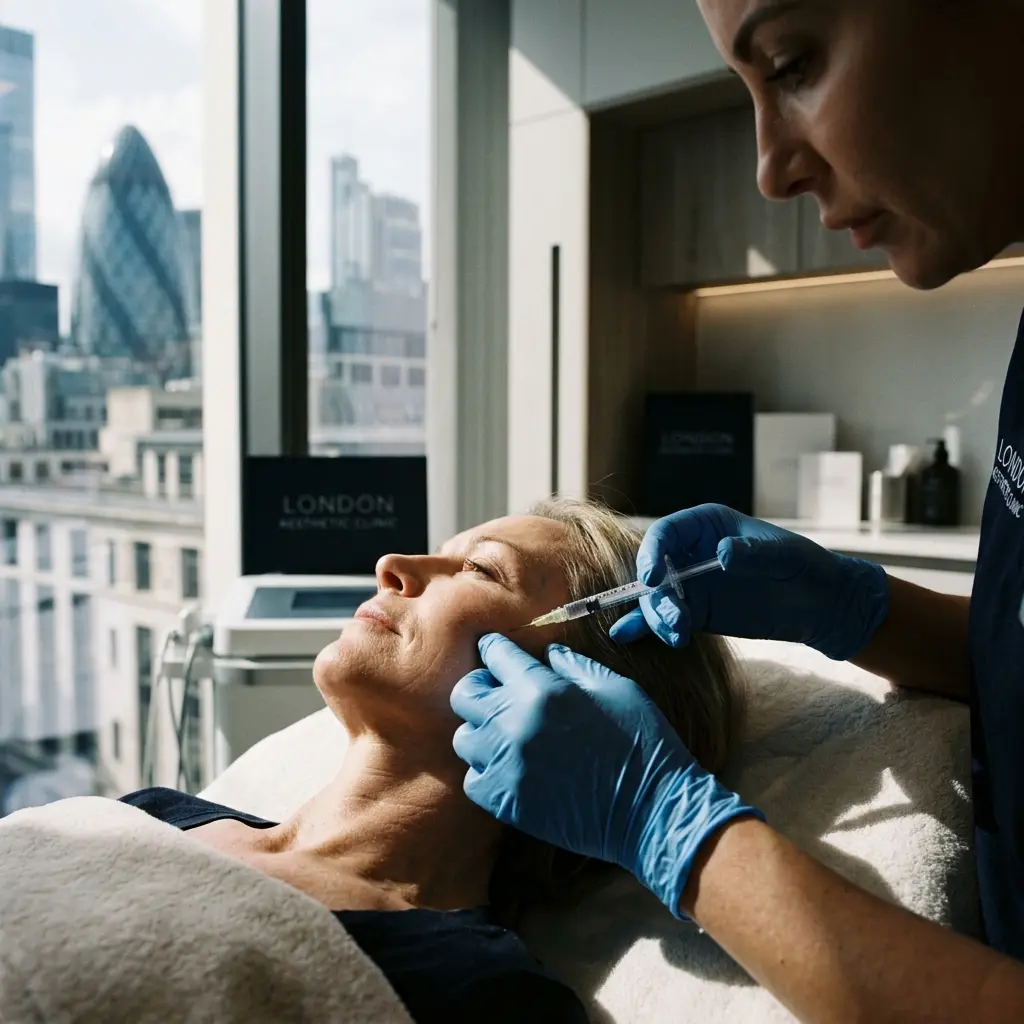
The actual treatment involves intradermal injections delivered in a precise pattern across the treatment area.
You’ll likely need a series of sessions spaced two to four weeks apart, depending on your specific condition and treatment goals.
Here’s the reality: the first few weeks won’t show dramatic visible changes. The biological processes take time to unfold.
Around week six to eight, you’ll start noticing:
- Improved skin hydration that feels different from topical moisturisation
- Enhanced elasticity when you touch your skin
- Gradual refinement of texture, particularly in scarred areas
- Reduction in inflammatory markers if that’s part of your concern
The changes continue developing for months after your final session. This happens because you’ve triggered a regenerative process, not simply filled a space.
Remember this: Results unfold gradually because you’re triggering biological regeneration, not adding temporary fillers. Changes continue developing for months after your final session.
Why Are Polynucleotides Gaining Popularity in London?
Polynucleotide injections have quickly gained popularity amongst patients and aesthetic professionals in London as a next-generation injectable that works with the skin’s own biology to regenerate, repair, and rejuvenate from within.
Patients increasingly want treatments that go beyond temporary fixes to achieve healthier skin.
The shift reflects a broader change in how people think about aesthetic treatments. You’re not looking for a quick cosmetic cover-up. You’re investing in your skin’s long-term health and function.
In London and surrounding areas, clinics offering polynucleotide treatments have access to the latest formulations and protocols. The treatment landscape here allows you to work with practitioners who understand both the science and the practical application.
The shift: London patients increasingly prioritise long-term skin health over temporary cosmetic fixes, driving demand for biologically-based regenerative treatments.
Is Polynucleotide Treatment Right for Your Skin?
A clinical trial on 143 patients demonstrated an improvement of skin elasticity and hydration, together with high levels of patient and physician satisfaction.
Experts achieved majority consensus that polynucleotides act as “bioreactivating primers” of skin with dermal reactivating properties that may be stronger than other primary skin active principles such as hyaluronic acid.
That clinical consensus matters when you’re evaluating your options.
If your skin condition involves structural damage, chronic inflammation, or compromised barrier function, polynucleotide treatment offers a mechanism that addresses the root biology rather than masking symptoms.
The treatment works because it gives your skin what it actually needs: the biological signals to repair itself properly.
You’re not adding something foreign that your body will eventually break down and eliminate. You’re triggering processes your skin already knows how to execute—it just needs the right instructions.
That difference shows up in how your skin looks, feels, and functions months after treatment ends.
Frequently Asked Questions
How long do polynucleotide results last?
Results typically last 6-12 months because the treatment triggers your skin’s own regenerative processes. Unlike temporary fillers that degrade, polynucleotides create structural changes that persist even after the injected material is absorbed.
How many sessions do I need?
Most patients require 2-4 sessions spaced 2-4 weeks apart, depending on the condition being treated. Your practitioner will tailor the protocol based on your specific skin concerns and response to treatment.
Does polynucleotide treatment hurt?
Discomfort is minimal. The treatment involves intradermal injections, and most clinics apply topical anaesthetic beforehand. Patients typically describe a mild tingling or pressure sensation during the procedure.
Can I combine polynucleotides with other treatments?
Yes. Polynucleotides work well alongside treatments like microneedling, laser resurfacing, or PRP therapy. In fact, they’re often used post-procedure to accelerate healing and enhance results. Always consult your practitioner about treatment combinations.
What’s the difference between polynucleotides and hyaluronic acid fillers?
Hyaluronic acid adds volume and hydration temporarily. Polynucleotides trigger biological regeneration by activating fibroblasts and restoring your skin’s own collagen and elastin production. They address underlying structural damage rather than filling space.
Are there any side effects?
Common side effects include mild swelling, redness, or bruising at injection sites, typically resolving within 24-48 hours. Serious adverse events are rare, with no reported cases of granuloma or vascular occlusion in the literature.
How soon can I see results?
Initial changes may appear within 2-3 weeks, but significant improvements typically become evident at 6-8 weeks post-treatment. Results continue developing for months as your skin completes its regenerative process.
Who should avoid polynucleotide treatment?
Pregnant or breastfeeding women, individuals with active skin infections, and those with fish or shellfish allergies (depending on the polynucleotide source) should avoid treatment. Always disclose your full medical history during consultation.
Key Takeaways
- Polynucleotides work by activating your skin’s natural repair mechanisms through purified DNA fractions, triggering collagen synthesis and structural remodelling rather than providing temporary volumisation.
- Clinical evidence from 2026 studies demonstrates measurable improvements in acne scarring, skin elasticity, hydration, and inflammatory conditions using standardised assessment scales.
- Best candidates have conditions requiring dermal regeneration: atrophic acne scars, photoaged skin, inflammatory conditions, barrier dysfunction, or post-procedure recovery needs.
- Results appear at 6-8 weeks and continue developing for months, with a favourable safety profile and no reported serious adverse events in the literature.
- Treatment requires 2-4 sessions spaced 2-4 weeks apart, with effects lasting 6-12 months because you’ve triggered biological processes, not just added temporary fillers.
- Polynucleotides represent a shift from cosmetic masking to biological regeneration, addressing root causes of skin damage rather than superficial symptoms.