

TL;DR: Safe cyst removal requires complete surgical excision by a qualified provider. Surgical excision has a 92.5% success rate because it removes the entire cyst capsule, preventing recurrence. Never attempt home removal—it causes infection and scarring. Success depends on proper timing, professional technique, and following post-procedure care protocols exactly.
Quick Answer: Safe Cyst Removal Best Practices
- When to remove: Rapid growth, persistent pain, signs of infection, or malignant tissue require immediate professional evaluation
- Best method: Complete surgical excision (92.5% success rate, 7.5% recurrence) removes the entire cyst capsule
- Never DIY: Home removal causes infection and permanent scarring
- Procedure time: 30-45 minutes with local anaesthesia; recovery takes 2-4 weeks
- Success factor: Complete excision plus disciplined post-procedure care prevents recurrence
Not every cyst needs removal. However, knowing which ones do can save you from serious complications because the difference between a straightforward procedure and a medical emergency often comes down to timing and technique.
I’m going to walk you through evidence-based protocols that minimise recurrence, reduce complications, and get you back to normal life quickly. At Shumaila’s Clinics, we’ve refined these approaches to ensure every patient receives safe, effective cyst removal with optimal results.
When Is Cyst Removal Medically Necessary?
The biggest mistake is waiting too long or acting too quickly.
Some cysts resolve independently. Others require immediate attention. The key is recognising which category yours falls into.
Two Primary Reasons Cysts Require Removal
Malignant tissue or infection are the two primary reasons a cyst demands removal. When either is present, delaying the procedure creates unnecessary risk.
Warning Signs That Require Professional Consultation
You should schedule a consultation if you experience:
- Rapid growth
- Persistent pain
- Signs of infection (redness or discharge)
- Location in a cosmetically sensitive area
These aren’t minor inconveniences. They’re indicators that intervention will prevent worse outcomes.
When Monitoring Is Appropriate
Stable, asymptomatic cysts can often be monitored. However, monitoring requires actual follow-up appointments, not just hoping the problem disappears.
If you’re uncertain about whether your cyst needs removal, book a consultation at Shumaila’s Clinics for a professional evaluation.
What Matters: Malignant tissue and infection require immediate removal. Warning signs like rapid growth, pain, or infection indicators demand professional evaluation, whilst stable cysts can be monitored with regular follow-up.
Why Surgical Excision Has the Highest Success Rate
Not all removal methods are created equal.
Surgical Excision vs. Alternative Methods
Surgical excision has a 92.5% success rate with only a 7.5% recurrence rate. In contrast, non-surgical methods sound appealing because they seem less invasive, but they leave cyst wall material behind. That material is precisely what causes the cyst to return.
Why Drainage and Aspiration Fail
I’ve seen patients try drainage or aspiration because it feels like the easier path. Then they’re back six months later dealing with the same problem, except now the tissue is more inflamed and the procedure is more complex.
What Complete Excision Means
Complete excision removes the entire cyst, including the capsule. That’s what prevents recurrence. Partial removal is just temporary relief with guaranteed future problems.
At Shumaila’s Clinics, we specialise in complete surgical cyst removal that addresses the root cause and prevents recurrence.
Procedure Duration and Recovery Timeline
- Procedure time: 30-45 minutes for straightforward cases
- Recovery period: 2-4 weeks average
Compare that timeline to repeated interventions from incomplete removal, and the choice is obvious.
Key Insight: Surgical excision achieves 92.5% success because it removes the entire cyst capsule. Drainage and aspiration leave cyst wall material behind, therefore causing recurrence within months.
Why Home Removal Always Fails

This should go without saying, but I’ll say it anyway.
Predictable Complications from DIY Removal
Infection or permanent scarring are the predictable results of trying to remove a cyst yourself. Popping, squeezing, or using sharp objects doesn’t remove the cyst. It damages surrounding tissue and introduces bacteria into an open wound.
Professional vs. Home Removal Conditions
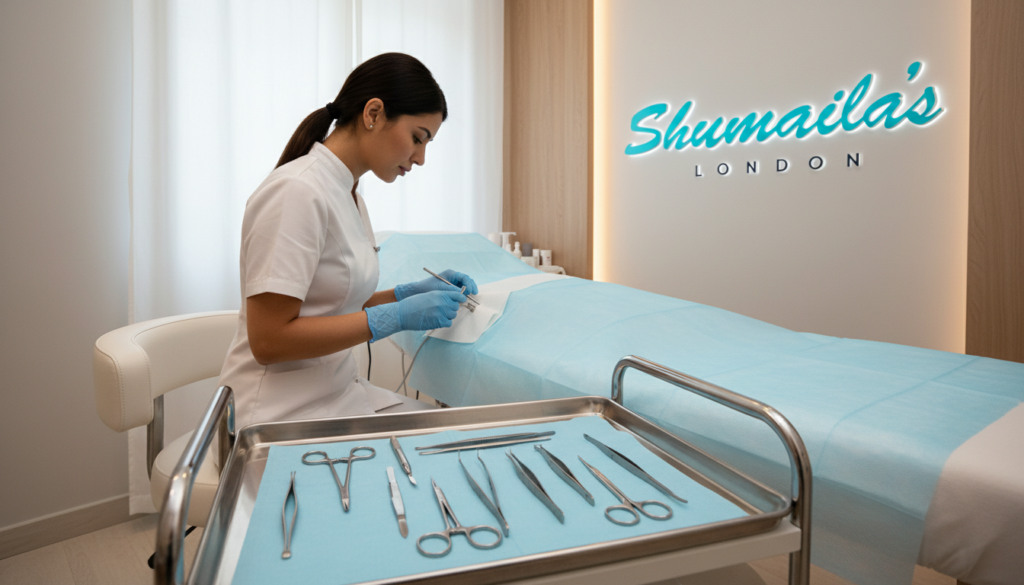
Professional removal happens under sterile conditions with proper anaesthesia. Home attempts happen with whatever tools you find in the bathroom. The outcomes reflect that difference.
The True Cost of DIY Removal
If you’re tempted to try DIY removal because of cost concerns, understand that treating the resulting infection will cost more than the original procedure. And the scarring is often irreversible.
Professional removal at Shumaila’s Clinics ensures safe, sterile procedures that protect both your health and appearance.
Critical Point: Home removal causes infection and permanent scarring because it lacks sterile conditions and proper anaesthesia. Treating DIY complications costs more than professional removal.
How Anaesthesia Makes Cyst Removal Pain-Free
Pain during cyst removal should be minimal to nonexistent.
Local Anaesthesia for Standard Cases
Local anaesthesia numbs the area completely. You might feel pressure during the procedure, but not pain. After the anaesthesia wears off, over-the-counter pain medication handles any discomfort.
When General Anaesthesia Is Required
Some complex cases require general anaesthesia, particularly for cysts in difficult locations or when multiple cysts need removal. Your provider will determine the appropriate approach based on your specific situation.
What to Expect During Recovery
The recovery period involves some soreness. That’s normal tissue healing, not a sign of complications. Proper wound care and following post-procedure instructions keep discomfort manageable and prevent infection.
Essential Fact: Local anaesthesia eliminates pain during removal. Post-procedure soreness is normal tissue healing and manageable with over-the-counter medication.
Post-Procedure Care Protocols That Prevent Complications

The procedure is only half the process.
Critical Care Instructions
What you do afterwards determines whether you heal cleanly or develop complications. You must:
- Keep the wound clean and dry
- Change dressings as instructed
- Watch for infection signs (increased redness, warmth, or discharge)
Activity Restrictions and Timeline
Most people can return to normal activities within a few days. However, that doesn’t mean the wound is fully healed. Internal tissue repair takes weeks. Pushing too hard too soon risks reopening the incision or causing bleeding.
Healing Duration by Cyst Size
- Small cysts: Days to weeks
- Larger excisions: Several weeks to months for complete healing
The scar will continue to fade over time, but initial healing happens faster when you follow care protocols precisely.
What Determines Success: Post-procedure care is equally important as the surgery itself. Following wound care instructions exactly prevents infection and reopening of the incision.
Why Follow-Up Appointments Are Non-Negotiable
Post-procedure monitoring catches problems early.
What Providers Check During Follow-Up
Your provider needs to verify healing is progressing normally and that no signs of recurrence are developing. Skipping follow-up appointments because everything “feels fine” is how small issues become big problems.
Questions Addressed in Follow-Up Sessions
These appointments also give you the chance to address any concerns about:
- Scarring progression
- Sensation changes
- Activity restrictions
Most questions patients have after the procedure get answered in these sessions, therefore preventing unnecessary worry.
Why This Matters: Follow-up appointments catch early signs of recurrence and address concerns about scarring or healing. Skipping them turns small issues into major complications.
FAQs About Safe Cyst Removal
What is the most effective method for cyst removal?
Complete surgical excision is the most effective method with a 92.5% success rate and only 7.5% recurrence. It removes the entire cyst including the capsule, which prevents the cyst from returning.
How long does cyst removal take?
The procedure takes 30-45 minutes for straightforward cases. Recovery averages 2-4 weeks, with small cysts healing in days to weeks and larger excisions taking several weeks to months.
Is cyst removal painful?
No. Local anaesthesia numbs the area completely during the procedure. You may feel pressure but not pain. Post-procedure soreness is manageable with over-the-counter pain medication.
Can I remove a cyst at home safely?
No. Home removal causes infection and permanent scarring because it lacks sterile conditions and proper anaesthesia. DIY attempts damage surrounding tissue and introduce bacteria into the wound.
When should I see a doctor about a cyst?
See a doctor immediately if you experience rapid growth, persistent pain, signs of infection (redness or discharge), or if the cyst is in a cosmetically sensitive area. Malignant tissue or infection requires immediate professional evaluation.
Why do cysts come back after drainage?
Drainage and aspiration leave the cyst wall material behind. That material is what causes the cyst to return, usually within six months. Only complete excision removes the capsule and prevents recurrence.
What happens if I skip follow-up appointments?
Skipping follow-up appointments prevents early detection of complications or recurrence. Your provider needs to verify healing is progressing normally and address any concerns about scarring or sensation changes.
How much does treating a DIY cyst removal complication cost?
Treating infections and scarring from DIY removal costs more than professional removal. The complications are often irreversible, particularly permanent scarring.
Key Takeaways
- Complete surgical excision achieves 92.5% success because it removes the entire cyst capsule, preventing recurrence that occurs with drainage or aspiration
- Seek immediate evaluation for warning signs: rapid growth, persistent pain, infection indicators, or malignant tissue require professional intervention
- Never attempt home removal—it causes infection and permanent scarring whilst costing more to treat than professional removal
- Local anaesthesia eliminates pain during the 30-45 minute procedure, with recovery averaging 2-4 weeks
- Post-procedure care is equally critical: following wound care instructions exactly prevents complications and reopening of the incision
- Follow-up appointments are non-negotiable because they catch early signs of recurrence and address healing concerns before they become major problems
- Choose complete excision over shortcuts—the difference between permanent resolution and recurring problems comes down to doing it right the first time
If you’re dealing with a cyst that shows warning signs, it’s time to take action. At Shumaila’s Clinics, we provide expert surgical cyst removal using proven techniques that deliver lasting results. Book your consultation today to get a proper evaluation and a personalised treatment plan. Don’t wait for complications—get it resolved properly the first time.