


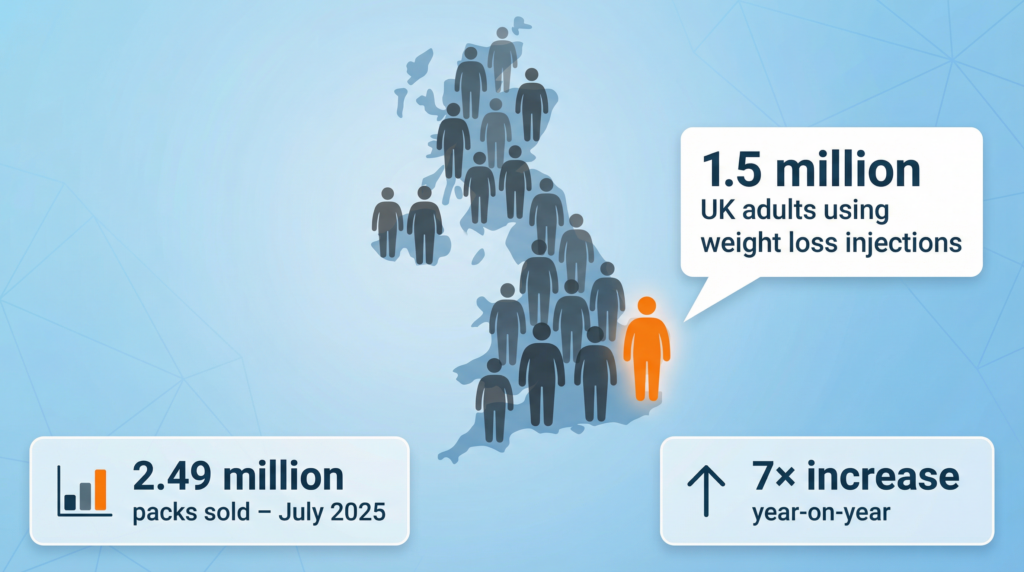
TL;DR: Weight loss injections (Wegovy and Mounjaro) are being used by 1.5 million UK adults because they deliver sustained weight loss results that diet and exercise alone often can’t achieve. Clinical trials show 15-21% average body weight loss, with results maintained for up to 4 years. NHS access is limited, making private treatment the primary option for most people.
Quick Answers:
- What are weight loss injections? GLP-1 receptor agonists (semaglutide and tirzepatide) that mimic natural hormones to regulate appetite and blood sugar.
- How effective are they? Wegovy delivers 14.9% average weight loss; Mounjaro achieves 20.9% average weight loss over clinical trials.
- Who qualifies? Adults with BMI 30+ (or 27+ with weight-related health conditions) who have tried traditional methods without long-term success.
- What’s the cost? £180-£220 per month privately; NHS access requires BMI 40+ and multiple comorbidities with limited availability.
- Are results permanent? Weight loss is sustained for up to 4 years in clinical trials when combined with lifestyle changes and continued treatment.
We’re watching something unprecedented unfold across the UK.
In March 2025, approximately 1.5 million UK citizens were actively using weight loss injections. By July, sales of Mounjaro and Wegovy hit a record 2.49 million packs—a sevenfold increase from the year before.
That means roughly one in every 20 UK adults is now using these medications.
The numbers tell us something important: this isn’t a trend. It’s a fundamental shift in how people approach weight management. And if you’re considering whether weight loss injections are right for you, understanding what’s driving this surge matters more than the hype surrounding it.
Why Are 1.5 Million UK Adults Using Weight Loss Injections?
Let’s start with where we are.
In 2023-2024, 64.5% of adults aged 18 and over in England were estimated to be overweight or living with obesity. Specifically, 26.5% of adults are now living with obesity. This figure has steadily climbed from 22.6% in 2015-2016.
The disparity gets sharper when you look at socioeconomic factors. Obesity rates reach 35.9% in the most deprived areas compared to just 20.5% in the least deprived areas.
These aren’t just statistics. They represent real health consequences.
People who are overweight are twice as likely to have high blood pressure. Between 65-78% of high blood pressure cases are caused by obesity. Research from the British Heart Foundation found that 31,000 circulatory disease-related deaths in the UK every year are associated with being overweight.
Hospital treatments for obesity have increased more than fourfold over the past decade. Treatments rose from approximately 442,000 in 2014 to nearly 1.9 million in 2024.
The traditional approaches aren’t working at scale. Diet and exercise remain foundational. However, for many people dealing with metabolic dysfunction, hormonal imbalances, or genetic predispositions, traditional methods are not enough.
Bottom Line: UK obesity rates have reached critical levels, with traditional diet and exercise approaches failing to reverse the trend at a population level, which explains why medical intervention through weight loss injections has become necessary for millions.
How Do Weight Loss Injections Work?
Weight loss injections work differently than anything that came before them.
The medications—primarily semaglutide (Wegovy) and tirzepatide (Mounjaro)—are GLP-1 receptor agonists. They mimic hormones your body naturally produces to regulate appetite and blood sugar.
What Results Can You Expect?
Wegovy (semaglutide) results:
- Average weight loss: 14.9% of body weight over 68 weeks
- 86% of participants lost 5% or more of baseline body weight
- Real-world results: 5.9% weight loss at 3 months, 10.9% at 6 months
Mounjaro (tirzepatide) results:
- Average weight loss: 20.9% of body weight in clinical trials
- Most effective drug currently approved for weight loss in adults with overweight or obesity
Effectiveness isn’t just about initial weight loss. It’s about sustainability.
Key Point: Weight loss injections deliver significantly higher weight loss percentages than diet and exercise alone because they address the underlying biological mechanisms of appetite regulation and metabolism, not just willpower.
How Long Do Weight Loss Injection Results Last?
Weight loss with semaglutide continues over 65 weeks and has been sustained for up to 4 years in clinical trials.
Long-term clinical data:
- At 208 weeks (4 years): 10.2% mean weight reduction versus placebo
- Waist circumference reduction: 7.7 cm at 4 years
- Waist-to-height ratio reduction: 6.9% at 4 years
- At week 104 (2 years): Over 75% of participants achieved 5% or more weight loss
This matters because most weight loss interventions fail not at the beginning, but in the maintenance phase. People lose weight, then gain it back. The cycle repeats.
These medications interrupt that cycle. They address the underlying biological mechanisms that make weight regain so common.
Essential Insight: Weight loss injections solve the maintenance problem that causes most diet and exercise programs to fail long-term, with proven results sustained for up to 4 years in clinical studies.
Can You Get Weight Loss Injections on the NHS?

From March 2025, Mounjaro became available through select GPs and primary care services. This marked the first time a weight loss injection could be prescribed in primary care settings in the UK.
However, NHS access follows strict criteria.
NHS Eligibility Requirements
You must have:
- BMI of at least 40 (or 37.5 for minority ethnic backgrounds)
- At least four weight-related comorbidities, including:
- Type 2 diabetes
- Hypertension
- Dyslipidemia
- Established cardiovascular disease
- Obstructive sleep apnea
NICE has directed a phased rollout over 12 years. Only 220,000 patients will be prioritized based on clinical need in the first 3 years.
For most people, that means waiting. Or going private.
The Demand vs. Access Gap
- 41% of the UK public would access weight loss treatments on the NHS if available
- 64% of 25-34 year-olds would use NHS weight loss treatments if available
- 21% of the public attempted to access weight loss treatments through online or in-person pharmacies in the last year
- 24% of Britons would use weight loss injections if available on NHS, compared with 7% who would pay privately at £180-£220 per month
The demand exists. The access doesn’t match it.
What This Means: NHS access to weight loss injections is severely limited, requiring extremely high BMI and multiple serious health conditions, therefore private treatment remains the only viable option for most people seeking these medications.
What Happens During Weight Loss Injection Treatment?
We’ve administered weight loss injections to hundreds of patients across our London and Essex locations. The patterns we observe align with the clinical data. However, the individual experiences add texture the studies can’t capture.
What Patients Experience
Patients report:
- Reduced food noise: The constant mental chatter about eating that many describe as exhausting decreases significantly
- Increased satiety: Feeling satisfied with smaller portions
- Manageable cravings: The cravings that derailed previous weight loss attempts become controllable
The treatment isn’t magic. It’s a tool.
What Drives the Best Results

The patients who see the best results combine the injections with sustainable lifestyle changes. They work with us to:
- Adjust their nutrition
- Increase their activity levels gradually
- Address the psychological components of their relationship with food
We also see patients who come to us after trying to access treatment through less regulated channels. The online pharmacy boom has created convenience. However, it’s also created risk. Patients need proper screening, monitoring, and support throughout treatment.
Clinical Reality: Weight loss injections work best when combined with lifestyle modifications and professional medical supervision, not as a standalone solution purchased through unregulated online channels.
What Are the Side Effects of Weight Loss Injections?
Weight loss injections aren’t appropriate for everyone. They come with side effects.
Common Side Effects
The most common include:
- Nausea (particularly in the first few weeks)
- Diarrhea or constipation
- Abdominal pain
- Fatigue
- Headaches
Most side effects are mild to moderate. They decrease over time as your body adjusts to the medication. We manage this by starting with lower doses and gradually increasing them.
Serious but Rare Side Effects
- Pancreatitis
- Gallbladder problems
- Thyroid tumors (observed in animal studies but not conclusively linked in humans)
Who Should Not Use Weight Loss Injections
You shouldn’t use these medications if you have:
- Personal or family history of medullary thyroid carcinoma
- Multiple Endocrine Neoplasia syndrome type 2
Proper screening matters. So does ongoing monitoring.
Safety Note: Most patients experience only mild, temporary side effects that diminish over time, but proper medical screening before starting treatment is essential to identify contraindications and ensure safe use.
How Does Weight Loss Connect to Other Aesthetic Concerns?
We’ve noticed something interesting in our practice.
Patients who successfully lose weight often become more aware of other aesthetic concerns they’d previously ignored or accepted. The confidence that comes with achieving weight loss goals creates momentum for addressing other areas.
What Is Melasma?
One of the most common concerns we hear about is melasma. These are brown or gray-brown patches that appear on the face, particularly on:
- Cheeks
- Forehead
- Nose
- Upper lip
Melasma affects women disproportionately (90% of cases). It often worsens with hormonal changes, sun exposure, and certain medications. For many of our patients, it’s been a source of self-consciousness for years.
How We Treat Melasma
We’ve developed specialized melasma treatment protocols that combine:
- Prescription-strength topical treatments
- Chemical peels
- Laser therapy tailored to your skin type and melasma severity
Expected results:
- Visible improvement in pigmentation within 4-6 weeks
- Continued improvement over 3-6 months of treatment
Aesthetic care isn’t one-dimensional. When you address one concern successfully, you create space to address others. Weight loss and skin treatments aren’t competing priorities—they’re complementary parts of feeling confident in your appearance.
The Confidence Effect: Successful weight loss often triggers increased motivation to address other aesthetic concerns like melasma because achieving one goal builds momentum and confidence to tackle others.
Are Weight Loss Injections Right for You?
Weight loss injections represent a significant commitment—financially, medically, and personally.
You Should Consider Weight Loss Injections If:
- You have a BMI of 30 or higher (or 27+ with weight-related health conditions)
- You’ve tried diet and exercise with limited long-term success
- You’re prepared to make lifestyle changes alongside the medication
- You understand this is a long-term treatment, not a quick fix
- You’re willing to commit to regular monitoring and follow-up appointments
Weight Loss Injections Are Not Right for You If:
- You’re looking for rapid weight loss without lifestyle changes
- You have contraindications based on your medical history
- You’re not prepared for the financial commitment (if accessing privately)
- You expect the medication to do all the work
Decision Framework: Weight loss injections are most effective for people with BMI 30+ who have struggled with traditional methods and are committed to long-term lifestyle changes, but they are not suitable for those seeking quick fixes without medical supervision or with specific contraindications.
How to Get Started with Weight Loss Injections
The surge in weight loss injection use across the UK reflects a broader recognition that obesity is a complex medical condition. For many people, medical intervention is necessary.
The medications work. The data proves it. The 1.5 million UK users aren’t chasing a fad. They’re accessing treatment that addresses the biological factors that make weight loss and maintenance so difficult.
However, effectiveness depends on proper implementation.
What to Expect at Shumaila’s Clinics
At Shumaila’s Clinics, we start every weight loss injection journey with a comprehensive consultation. We:
- Review your medical history
- Discuss your weight loss goals
- Explain exactly how the medications work
- Create a personalized treatment plan that includes nutritional guidance and ongoing support
We also address the aesthetic concerns that often accompany weight loss—from melasma treatment to skin tightening to body contouring.
Book a consultation at our London or Essex locations to discuss whether weight loss injections are right for you. We’ll give you honest answers, clear expectations, and a treatment plan based on your individual circumstances.
The conversation starts with understanding where you are and where you want to be. Everything else follows from there.
Frequently Asked Questions About Weight Loss Injections
How quickly will I see results from weight loss injections?
Most patients notice reduced appetite within the first week. Measurable weight loss typically begins within 2-4 weeks. Clinical data shows average weight loss of 5.9% at 3 months and 10.9% at 6 months with semaglutide treatment.
Do I need to stay on weight loss injections forever?
Weight loss injections are considered a long-term treatment. Clinical trials show sustained results for up to 4 years with continued use. Stopping treatment often leads to weight regain because the medications address underlying biological mechanisms. Your healthcare provider will help determine the appropriate duration based on your individual circumstances.
Can I use weight loss injections if I have diabetes?
Yes. Both semaglutide and tirzepatide were originally developed for type 2 diabetes management. However, you must discuss your diabetes medications with your healthcare provider because weight loss injections can affect blood sugar levels, requiring adjustments to your diabetes treatment plan.
What’s the difference between Wegovy and Mounjaro?
Wegovy (semaglutide) is a GLP-1 receptor agonist with average weight loss of 14.9%. Mounjaro (tirzepatide) is a dual GIP/GLP-1 receptor agonist with average weight loss of 20.9%, making it more effective. Mounjaro typically costs slightly more and may have different side effect profiles.
Will I gain the weight back if I stop the injections?
Weight regain is possible if you stop treatment without maintaining lifestyle changes. Clinical studies show that patients who discontinue weight loss injections often regain weight over time. Long-term success requires continued treatment or permanent lifestyle modifications that address the factors that led to weight gain initially.
Can I drink alcohol while on weight loss injections?
Moderate alcohol consumption is generally acceptable. However, alcohol contains calories that can slow weight loss progress. Some patients report increased sensitivity to alcohol or reduced desire to drink while on treatment. Excessive alcohol consumption can also increase the risk of pancreatitis, a rare but serious side effect.
Are weight loss injections covered by private health insurance in the UK?
Coverage varies by insurance provider and policy. Most private health insurance plans in the UK do not currently cover weight loss injections for cosmetic purposes. Some may cover treatment if you have obesity-related comorbidities and meet specific medical criteria. Check with your insurance provider directly.
How do weight loss injections affect fertility and pregnancy?
Weight loss injections are not recommended during pregnancy. Women of childbearing age should use effective contraception during treatment. If you’re planning to become pregnant, you should discontinue weight loss injections at least 2 months before attempting conception. Consult your healthcare provider for personalized guidance.
Key Takeaways
- 1.5 million UK adults are using weight loss injections because they deliver sustained, clinically proven results that traditional diet and exercise often cannot achieve alone.
- Wegovy delivers 14.9% average weight loss; Mounjaro achieves 20.9% in clinical trials, with results sustained for up to 4 years when treatment continues.
- NHS access is severely restricted (BMI 40+, multiple comorbidities, limited availability), making private treatment at £180-£220 per month the primary option for most people.
- Weight loss injections work by mimicking natural hormones that regulate appetite and blood sugar, addressing biological mechanisms rather than relying solely on willpower.
- Best results require lifestyle changes alongside medication—the injections are a tool, not a magic solution, and work optimally with nutritional adjustments and professional supervision.
- Side effects are typically mild and temporary (nausea, digestive issues) but proper medical screening is essential to identify contraindications and ensure safe use.
- Weight loss success often creates momentum for addressing other aesthetic concerns like melasma, making comprehensive aesthetic care more effective when approached holistically.