

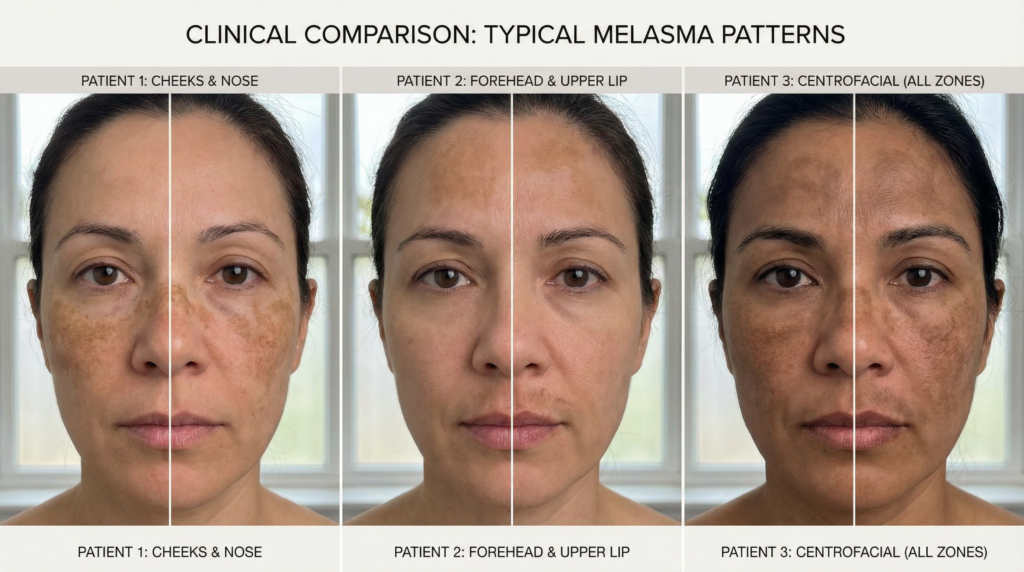
TL;DR: Melasma treatment requires a multi-step approach combining trigger identification, topical treatments (77% success rate with triple-combination cream), advanced procedures, and ongoing maintenance. Sun protection is essential because sun exposure is the primary trigger.
- First-line treatment: Triple-combination cream (hydroquinone, tretinoin, corticosteroid) shows 77% complete or near-complete clearance
- Key trigger: Sun exposure (3+ hours daily) significantly worsens melasma severity
- Advanced options: Fractional lasers, IPL, microneedling, intradermal PRP, and oral tranexamic acid
- Maintenance required: Daily sunscreen and regular follow-ups every 3-6 months because melasma is chronic
- Who’s affected: 90% of cases occur in women; typically begins ages 20-40
I’ve seen melasma affect 15% to 50% of pregnant patients, and approximately 90% of all cases occur in women. If you’re dealing with those stubborn brown patches on your face, you’re not alone.
Here’s how I approach melasma treatment at Shumaila’s Clinics across our nine London and Essex locations.
What Triggers Melasma?
Sun exposure is the most important triggering factor for melasma. Patients with higher sun exposure (3+ hours daily) show significantly greater severity scores than those with less exposure.
Track these factors:
- Daily sun exposure (even on cloudy London days)
- Hormonal contraception (24% of melasma patients use it)
- Pregnancy history (affects severity scores)
- Family history (48% of patients report genetic links)
London’s variable climate means even winter sun can worsen your condition.
Bottom line: Identifying your specific triggers is essential because melasma severity directly correlates with sun exposure and hormonal factors.
What Is the Most Effective First-Line Treatment?
Triple-combination cream (hydroquinone, tretinoin, and corticosteroid) remains the most effective first-line treatment.
Expected results:
77% of patients achieve complete or near-complete clearance. You’ll notice clinically significant improvement within 4-8 weeks.
Apply the cream as directed during your consultation. Consistency matters more than intensity.
What this means: Triple-combination cream offers the highest success rate for initial melasma treatment, therefore it should be your starting point.
What Advanced Treatment Options Are Available?

If topical treatments don’t give you the results you want, I recommend exploring these advanced treatment options:
- Fractional lasers: Target deeper pigmentation layers
- Intense pulsed light (IPL): Provides broader coverage for widespread patches
- Microneedling: Enhances product penetration into skin
- Intradermal PRP (platelet-rich plasma): Best for stubborn cases
- Oral tranexamic acid: Works systemically when combined with other treatments
Recent clinical trials identify intradermal PRP as one of the best treatment options available.
Key insight: Advanced treatments are necessary when topical options fail because melasma varies in depth and severity.
How Do I Maintain Results Long-Term?
Melasma is chronic and recurrent. This means you need an ongoing strategy, not a one-time fix.
Your maintenance routine should include:
- Daily broad-spectrum sunscreen (non-negotiable)
- Regular follow-up appointments every 3-6 months
- Adjusted treatments as your skin responds
- Lifestyle modifications to minimize triggers
The chronic nature of melasma often requires multimodal treatment combining various approaches.
Remember this: Melasma maintenance is ongoing because the condition recurs without continuous sun protection and treatment adjustments.
What Should I Realistically Expect?

Melasma is a widespread condition affecting millions of people across the UK. The condition typically begins between ages 20 and 40.
If you’re of Hispanic or Asian descent, you’re three times more likely to develop melasma than white or black populations.
Understanding these statistics helps you realise that professional, ongoing treatment provides real value.
The reality: Melasma requires professional intervention because of its chronic nature and the complexity of effective treatment.
How to Get Started
Book a consultation at any of our nine London and Essex locations. I’ll assess your specific condition and recommend a tailored treatment plan that addresses your unique skin concerns and lifestyle factors.
Your melasma treatment starts with understanding what you’re dealing with and committing to a comprehensive approach.
Frequently Asked Questions
Can melasma go away on its own?
Melasma can fade on its own, particularly if triggered by pregnancy or hormonal contraception that’s discontinued. However, most cases are chronic and recurrent, requiring ongoing treatment and sun protection to maintain results.
How long does it take to see results from melasma treatment?
With triple-combination cream, you’ll notice clinically significant improvement within 4-8 weeks. Advanced treatments like lasers or PRP may require multiple sessions over several months for optimal results.
Is melasma treatment painful?
Topical treatments are not painful. Advanced procedures like microneedling or laser treatments may cause mild discomfort, but numbing cream is typically applied beforehand to minimise any sensation.
Can I wear makeup during melasma treatment?
Yes, you can wear makeup during treatment. In fact, mineral-based makeup with SPF can provide additional sun protection. However, avoid heavy makeup immediately after advanced procedures like lasers or microneedling.
Does melasma treatment work on all skin types?
Melasma treatment works across skin types, but treatment selection varies. Darker skin tones require more careful laser settings to avoid post-inflammatory hyperpigmentation. Therefore, professional assessment is essential.
Will my melasma come back after treatment?
Melasma is chronic and recurrent, so patches can return without proper maintenance. Daily sunscreen, trigger avoidance, and regular follow-ups every 3-6 months significantly reduce recurrence risk.
Can men get melasma?
Yes, although 90% of cases occur in women. Men who develop melasma typically have it triggered by sun exposure rather than hormonal factors. Treatment approaches remain the same regardless of gender.
Is melasma covered by NHS?
Melasma is typically considered a cosmetic concern, so NHS coverage is limited. Private treatment at specialist clinics like Shumaila’s Clinics offers comprehensive assessment and advanced treatment options not usually available through NHS.
Key Takeaways
- Triple-combination cream is the gold standard first-line treatment with 77% success rate
- Sun exposure is the primary trigger—daily broad-spectrum sunscreen is non-negotiable
- Melasma is chronic and recurrent, requiring ongoing maintenance every 3-6 months
- Advanced treatments (fractional lasers, IPL, microneedling, intradermal PRP) are effective when topical treatments fail
- Women account for 90% of cases; condition typically begins between ages 20-40
- Hormonal factors (pregnancy, contraception) and family history significantly influence melasma development
- Professional assessment is essential because treatment must be tailored to your skin type and specific triggers
Ready to address your melasma? Book your consultation today at any of our nine London and Essex locations. I’ll create a personalised treatment plan that targets your specific triggers and delivers real results.