

We’ve watched hundreds of women walk into consultations after spending six months boiling rosemary sprigs in their kitchens.
They’ve rubbed onion juice into their scalps. They’ve massaged castor oil into their hairlines every night. They’ve followed TikTok tutorials with millions of views.
And they’re still losing hair.
The problem isn’t their commitment. The problem is that social media has created an entire ecosystem of hair loss advice that sounds scientific but lacks the clinical foundation to address what’s actually happening at the follicle level.
The Numbers Tell a Different Story
Over 20% of women under 50 in the UK experience hair thinning. That number climbs to 65% during and after menopause.
Here’s what shocked me: 39% of women are dealing with hair fall before age 35.
When we see these statistics alongside the explosion of DIY remedies online, we understand why so many women delay seeking professional help. The internet offers hope in a spray bottle.
But hope without mechanism is just wishful thinking.
The Emotional Trap That Keeps Women Googling
A 2025 study revealed something I see every week in practice: 78% of women with alopecia experienced shame, anxiety, and depression related to their hair loss.
85% reported reduced self-esteem. 31% felt depressed.
And here’s the vicious cycle: 41% said the anxiety and stress from losing their hair caused even more hair fall.
When you’re in that emotional state, a TikTok video promising regrowth from ingredients in your kitchen feels like a lifeline. It’s accessible. It’s affordable. It’s something you can start today.
We understand that impulse completely.
But the emotional urgency that drives women toward DIY solutions is the same urgency that should drive them toward evidence-based treatment.
What’s Actually in Your Feed
We decided to look at the research on hair loss content across social media platforms.
The findings were worse than we expected.
Only 4% of Instagram posts and 10% of TikTok videos about alopecia were created by medical professionals.
The content quality scores ranged from 1.47 to 2.66 out of 5. The percentage of videos created by dermatologists ranged from 0% to 18.9% depending on the platform.
What filled the gap? Personal anecdotes. Unproven remedies. Recommendations based on individual experiences that have no bearing on your specific type of hair loss.
The algorithm doesn’t care about clinical evidence. It cares about engagement.
And nothing engages like a before-and-after photo, even when the lighting is different and the hair is styled differently and there’s no way to verify the timeline or treatment protocol.
The Rosemary Oil Reality Check
Let’s address the remedy we’re asked about most often.
Rosemary oil does have some clinical backing. A study compared it to minoxidil and found that both groups experienced significant hair count increases at the six-month mark.
But here’s what the TikTok videos don’t mention:
No significant change appeared at three months. You need to use it two or three times per week for six months to see meaningful improvement.
The study used standardised concentrations. The participants followed specific protocols. The results were measured objectively.
When you’re boiling rosemary sprigs in your kitchen and spraying the water on your scalp daily, you’re not following that protocol. You have no idea what concentration you’re using. You’re not measuring results objectively.
You’re hoping.
The Dosing Problem Nobody Talks About
Even when a natural remedy has some evidence behind it, the DIY approach introduces a critical variable: unstandardised dosing.
Research into social media hair loss content found videos advising viewers to apply cloves of garlic directly to the scalp or create rosemary water with no measured percentages.
This matters more than you might think.
When clinical studies test a treatment, they use precise concentrations. They control for application frequency. They measure outcomes systematically.
When you’re following a video tutorial, you’re introducing so many variables that even if you see improvement, you won’t know why. And if you don’t see improvement, you won’t know what to adjust.
What Actually Has FDA Approval
We’re going to give you the information that should be at the top of every hair loss search result.
The only FDA-approved medications for androgenetic alopecia are finasteride and minoxidil.
In clinical studies that led to FDA approval of minoxidil 2% solution, 19% of women reported moderate hair regrowth after eight months. 40% reported minimal regrowth.
Compare that to 7% of women using a placebo.
The difference between 19% and 7% might not sound dramatic, but when you’re the person experiencing regrowth, it changes everything.
Minoxidil works by prolonging the growth phase of hair follicles and increasing blood flow to the scalp. We understand the mechanism. We can predict the response. We can adjust the protocol based on your results.
The Cost of Waiting

Here’s what we wish every woman knew before spending months on DIY remedies:
By the time you notice hair loss, you may have already lost over 15% of your hair volume.
Hair loss is progressive. The longer you wait to address the underlying cause, the more follicles enter a dormant state that becomes increasingly difficult to reactivate.
We’ve seen women spend nine months trying rosemary oil, onion juice, and scalp massages before booking a consultation. By that point, we’re working with significantly less baseline hair than if they’d come in at month one.
The DIY approach feels low-risk because it’s low-cost and low-commitment. But the real cost is time, and time is the one resource you can’t get back when it comes to hair follicles.
What a Trichologist Actually Does
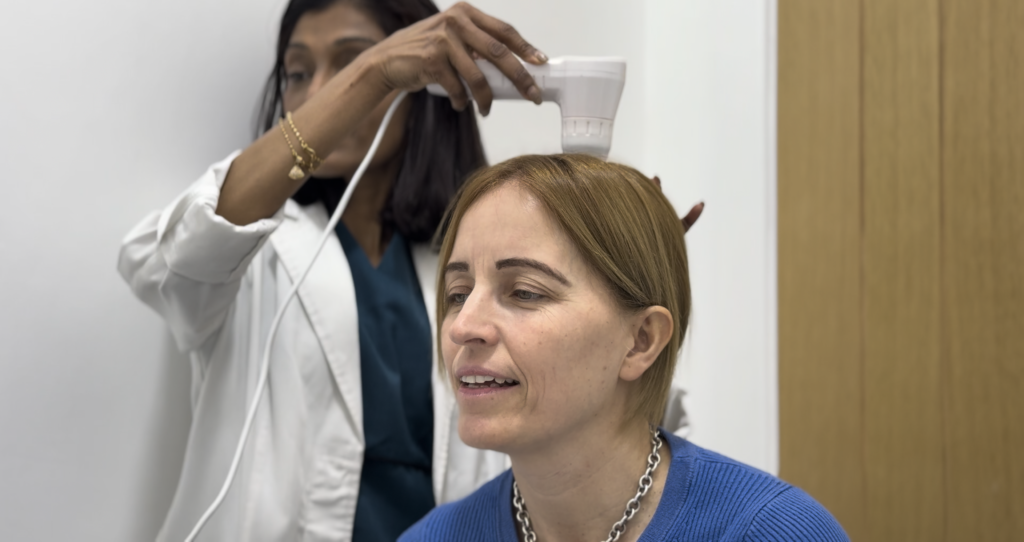
When you come in for a consultation, we’re not just looking at your hair.
We’re looking at your scalp health. Your hair density patterns. Your family history. Your hormonal profile. Your stress levels. Your nutritional status. Your styling habits.
Hair loss in women is rarely about one single factor.
It might be androgenetic alopecia combined with telogen effluvium triggered by a stressful period. It might be nutritional deficiencies compounding genetic predisposition. It might be styling damage masking early-stage pattern hair loss.
A bottle of rosemary oil can’t diagnose the difference.
Treatment protocols in a clinical setting are customised based on your specific type of hair loss, your goals, and your tolerance for different interventions. We measure progress objectively. We adjust based on response.
The Bridge Between Natural and Clinical
We’re not suggesting you abandon everything natural.
What we’re suggesting is that you use natural approaches as supplements to evidence-based treatment, not as replacements for it.
If you want to use rosemary oil alongside minoxidil, we can discuss that. If you want to optimise your nutrition while using FDA-approved treatments, that’s a conversation worth having.
But starting with DIY remedies and hoping they’ll be enough is like trying to treat a bacterial infection with herbal tea. The tea might have some beneficial properties, but it’s not going to address the underlying pathology.
What We Tell Every New Client

You deserve treatment that’s backed by clinical evidence and customised to your specific situation.
You deserve to understand what’s causing your hair loss at a cellular level, not just what worked for someone’s cousin on Instagram.
You deserve to have your progress measured objectively so you know whether your treatment is working.
The women we see who get the best results are the ones who come in early, commit to evidence-based protocols, and give treatments adequate time to work.
They’re not more patient than you. They’re not more disciplined. They just have better information.
Moving Forward
If you’ve been dealing with hair thinning and you’ve spent months trying DIY remedies, we want you to know that’s not time wasted.
It’s information. It tells us you’re motivated. It tells us you’re willing to put in consistent effort. It tells us you’re ready for a solution.
Now we just need to direct that effort toward treatments that can actually stimulate follicle regrowth at a cellular level.
The consultation is where we start. We assess your specific type of hair loss. We discuss your goals and concerns. We create a treatment plan based on clinical evidence, not social media trends.
Your hair loss has a cause. That cause has a treatment. And that treatment is more accessible than you think.
Book a consultation and let’s figure out what’s actually happening with your hair.