


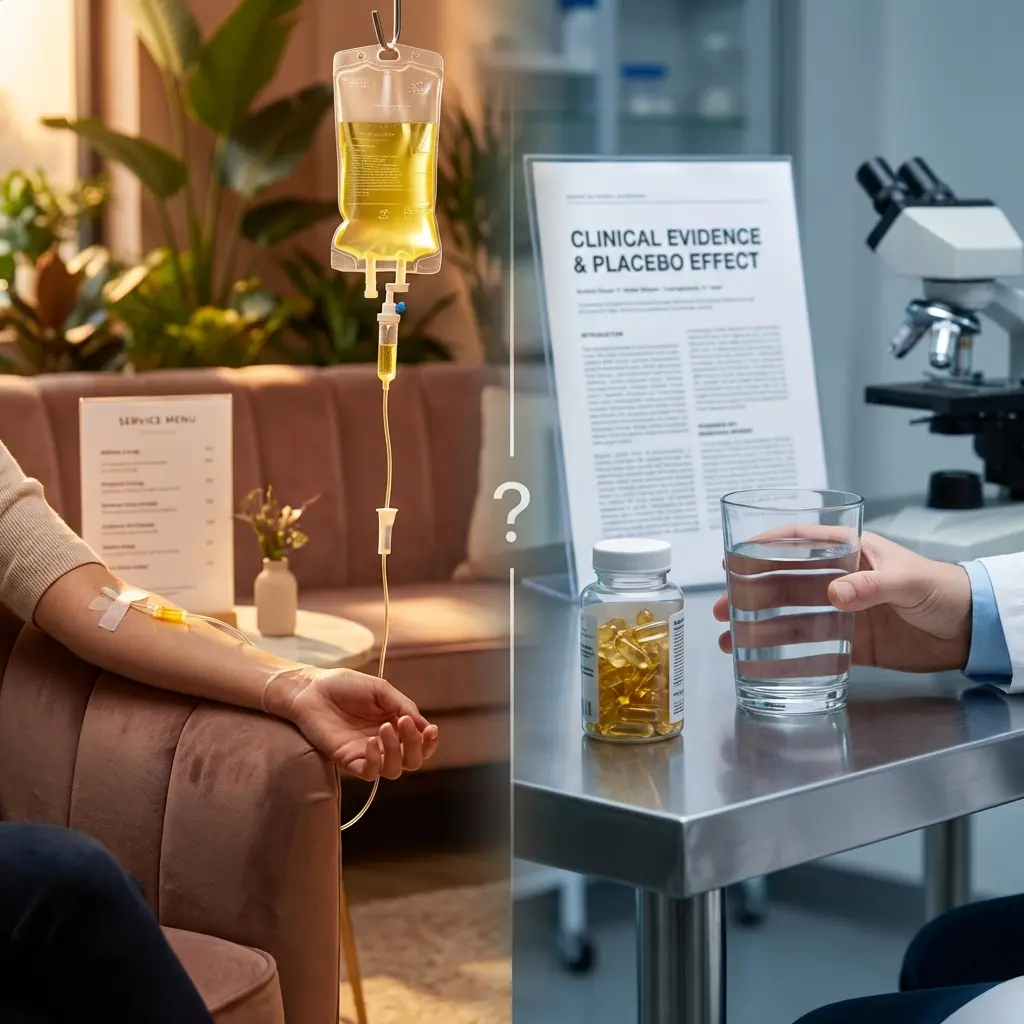
TL;DR: IV drip therapy delivers vitamins and minerals directly into your bloodstream with near-perfect absorption. However, scientific evidence shows limited benefits for healthy individuals. The treatment works for documented deficiencies and medical conditions, but not as a routine wellness intervention. Costs range from £80-£500 per session in London. Safety risks include infection, kidney damage, and heart rhythm issues—especially at unregulated providers. If considering treatment, choose CQC-registered clinics with qualified medical professionals, get blood work first, and set realistic expectations.
- Bioavailability: IV therapy achieves 100% absorption vs. 20% for oral supplements
- Scientific consensus: American College of Clinical Pharmacology (2024) states “little to no evidence benefits outweigh risks” for healthy people
- Duration of effects: Results last 1-2 weeks maximum, requiring monthly treatments
- Cost analysis: Preparation costs £14; London clinic prices £80-£500
- Safety standard: CQC-registered medical clinics provide safest treatment environment
You’ve seen the Instagram posts. The wellness lounges promising instant energy. The mobile services arriving at your door across London and Essex with bags of vitamins ready to drip directly into your bloodstream.
IV drip therapy has exploded across London and Essex, marketed as everything from hangover cure to performance enhancer to immune system booster.
But before you book that consultation, we need to talk about what the research actually shows—and how to choose a provider who prioritises evidence-based care over empty promises.
What Is IV Drip Therapy?
IV drip therapy delivers vitamins, minerals, and nutrients directly into your bloodstream through an intravenous drip.
This bypasses your digestive system entirely.
The nutrients go straight into your bloodstream, achieving nearly 100% bioavailability. In contrast, oral vitamin C absorbs at roughly 20% efficiency.
On paper, this makes sense. One targeted IV session could theoretically equal five days of oral supplementation.
The critical question: Does this matter for someone who isn’t clinically deficient? Working with qualified medical professionals makes all the difference in answering this question.
Key insight: High bioavailability only benefits those with documented deficiencies, not healthy individuals with normal nutritional intake.
Does IV Therapy Work? What Research Shows
The scientific evidence for IV therapy in healthy individuals is limited.
In 2024, the American College of Clinical Pharmacology released a position statement concluding: “There is little to no evidence that the benefits outweigh the risks” for hydration and vitamin infusions in healthy individuals.
Mayo Clinic’s research director stated that limited evidence shows IV vitamins benefit people with normal nutritional intake. Most studies supporting IV therapy suffer from poor design.
Bottom line: The benefits in healthy individuals remain primarily anecdotal. This is why working with a medically trained practitioner who conducts proper assessments is essential.
The Myers’ Cocktail Study
The Myers’ Cocktail is one of the most popular IV formulations. A 2009 placebo-controlled study involving 34 adults with fibromyalgia found no significant differences between the Myers’ Cocktail and placebo.
Both groups experienced relief compared to baseline.
Translation: The placebo effect appears strong with IV therapy.
Research snapshot: Current evidence does not support routine IV therapy for healthy individuals without documented deficiencies.
When Does IV Therapy Actually Work?
IV therapy has recognised clinical value for specific medical conditions.
Legitimate medical uses for IV therapy:
- Severe dehydration requiring immediate intervention
- Documented nutrient deficiencies confirmed by blood work
- Medical conditions preventing oral absorption
- Specific medication administration
For everyday complaints—mild flu, workout recovery, jet lag, or hangovers—medical professionals emphasise a simpler approach: drink plenty of fluids and get adequate rest.
Your body already knows how to rehydrate. It doesn’t need a 200 intervention to do what water accomplishes naturally.
Bottom line: IV therapy serves legitimate medical needs but is not supported as a wellness intervention for healthy individuals.
How Much Does IV Therapy Cost in London?
IV therapy sessions in London cost between £80 and £250. Specialised treatments reach £500 or more.
Health insurance rarely covers these treatments because they’re considered wellness procedures, not medical necessities.
A 2009 study found that preparation costs for one dose of IV micronutrient therapy totalled just $18 (approximately £14). The markup in wellness settings is substantial—often 500-3000%.
Key question: Is the premium price justified by the evidence, or are you paying for the experience and placebo effect?
Cost reality: You’re paying 80- 500 for a treatment that costs 14 to prepare, with limited evidence of benefit for healthy individuals.
Is IV Therapy Safe? Potential Risks
IV therapy carries real risks, especially when administered outside regulated medical settings.
Documented risks of high-dose IV vitamins and minerals:
- Kidney damage
- Heart rhythm abnormalities
- Blood pressure changes
- Gastrointestinal symptoms
- Damage to peripheral nerves
In wellness settings like spas or mobile services, adherence to sterile techniques may fall short of medical standards. This increases infection risks—a critical concern in any IV procedure.
Regulatory Concerns
The World Anti-Doping Agency banned IV infusions over 100ml in 2018—not because they provide performance benefits, but due to safety concerns.
In the United States, wellness spas offering IV therapies remain largely unregulated. Unlicensed individuals can administer infusions in many states.
The UK has stricter regulations, but standards vary significantly between providers. Choosing a CQC-registered clinic with qualified medical professionals ensures you receive care that meets the highest safety and clinical standards.
Safety takeaway: IV therapy carries genuine risks. Choose CQC-registered clinics with qualified medical professionals to minimise complications.
How Long Do IV Therapy Results Last?
Even when people report positive effects from IV therapy, those effects typically last one to two weeks maximum.
This creates a subscription model where many people receive treatments monthly to maintain perceived benefits.
The reported beneficial effects should not replace fundamental sustainable health practices: balanced nutrition, regular physical activity, and sufficient rest.
Any reputable provider will emphasise this as part of a holistic approach to wellbeing.
The “instant boost” many users report may stem from expectation, environment, or the premium service model offered by IV lounges. The experience itself becomes therapeutic, independent of the actual nutrients delivered.
This is why a thorough consultation with a medical professional is invaluable—it helps distinguish genuine clinical need from wellness marketing.
Duration reality: Effects last 1-2 weeks, creating a recurring cost of 80- 500 per month to maintain benefits.
Should You Try IV Therapy? Decision Framework
If you’re considering IV drip therapy in London or Essex, approach it with clear expectations.
You’re not investing in a medically proven intervention for wellness optimisation. You’re trying a treatment with limited scientific backing, potential risks, and transient effects.
That doesn’t mean it’s wrong to try it. However, you should:
- Choose providers with qualified medical professionals who conduct proper assessments—look for CQC-registered clinics that prioritise patient safety
- Verify that the clinic follows strict sterile protocols and uses pharmaceutical-grade ingredients
- Get blood work done first to identify any actual deficiencies
- Set realistic expectations about duration and magnitude of effects
- Consider whether the cost justifies the temporary boost you might experience
The Federal Trade Commission charged a company in 2018 for making deceptive and unsupported health claims about Myers’ cocktail and other IV vitamin infusions.
Marketing promises often exceed scientific evidence—which is why seeking a medically supervised consultation is the first step towards informed decision-making.
Decision guide: Get blood work first, choose CQC-registered providers, and maintain realistic expectations about duration and magnitude of effects.
IV Therapy: Summary and Recommendations
IV drip therapy occupies a space between legitimate medical treatment and wellness trend.
For people with documented deficiencies or specific medical conditions, it serves a real purpose.
For healthy individuals seeking optimisation, the evidence remains thin.
The near-perfect bioavailability sounds impressive until you realise your body doesn’t need perfect absorption if you’re not deficient in the first place.
Before You Book
Start with basic blood work. Find out what your body actually needs. Optimise your nutrition, hydration, and sleep first.
If you still want to try IV therapy, go in with your eyes open. Choose a provider carefully—one who takes the time to understand your health history, conducts thorough assessments, and operates within a regulated medical environment.
Don’t expect miracles. Recognise that the premium you’re paying should be for medical expertise and pharmaceutical-grade care, not just the experience.
The research doesn’t support IV drips as a routine wellness intervention for healthy people.
What it does support is the importance of informed decision-making based on evidence rather than marketing.
That’s what we owe ourselves when investing in our health—and what you should expect from any clinic you trust with your wellbeing.
Final verdict: IV therapy works for documented deficiencies but lacks evidence as a wellness intervention. Choose CQC-registered providers if you proceed.
How to Choose a Safe IV Therapy Provider in London and Essex
If you’ve decided that IV therapy might benefit you based on genuine clinical need—not wellness trends—the next step is choosing a provider who takes your safety and health outcomes seriously.
Medical-Grade IV Therapy: Shumaila’s Clinic
Shumaila’s clinic offers IV drip therapy within a fully regulated, CQC-registered medical environment.
Every treatment begins with a comprehensive consultation and health assessment to determine whether IV therapy is genuinely appropriate for your individual needs—not just whether you’re willing to pay for it.
What sets medical-grade IV therapy apart:
- Qualified medical professionals administering every treatment
- Pharmaceutical-grade nutrients sourced through regulated suppliers
- Sterile clinical protocols that meet or exceed NHS standards
- Thorough pre-treatment assessments including medical history review
- Honest, evidence-based advice about what IV therapy can and cannot achieve
Located in London and Essex, Shumaila’s clinic prioritises your safety and wellbeing above sales.
If blood work reveals you don’t need IV therapy, they’ll tell you. If lifestyle modifications would serve you better, they’ll recommend those first.
That’s the difference between a wellness spa and a medical clinic—and it’s the standard you should expect when someone is putting a needle in your arm.
Provider standard: CQC-registered clinics with qualified medical professionals provide the safest IV therapy environment in London and Essex.
Book your consultation today to discuss whether IV drip therapy is right for you.
Frequently Asked Questions About IV Drip Therapy
Does IV therapy really work better than oral supplements?
IV therapy achieves 100% bioavailability compared to 20% for oral supplements. However, this only matters if you have documented nutrient deficiencies. For healthy individuals with normal nutritional intake, the American College of Clinical Pharmacology (2024) states there is “little to no evidence that the benefits outweigh the risks.”
How much does IV therapy cost in London?
IV therapy sessions in London cost between £80-£250 for standard treatments. Specialised formulations reach £500 or more. Health insurance rarely covers these treatments. The actual preparation cost is approximately £14, meaning you’re paying a 500-3000% markup.
Is IV drip therapy safe?
IV therapy carries real risks including kidney damage, heart rhythm abnormalities, blood pressure changes, and infection—especially at unregulated providers. The World Anti-Doping Agency banned IV infusions over 100ml in 2018 due to safety concerns. Choose CQC-registered clinics with qualified medical professionals to minimise risks.
How long do IV therapy results last?
Effects typically last one to two weeks maximum. This creates a subscription model requiring monthly treatments at £80-£500 per session to maintain perceived benefits.
What conditions actually benefit from IV therapy?
IV therapy has recognised clinical value for severe dehydration requiring immediate intervention, documented nutrient deficiencies confirmed by blood work, medical conditions preventing oral absorption, and specific medication administration. It is not supported as a wellness intervention for healthy individuals.
What is the Myers’ Cocktail and does it work?
The Myers’ Cocktail is a popular IV formulation containing vitamins and minerals. A 2009 placebo-controlled study found no significant differences between the Myers’ Cocktail and placebo in adults with fibromyalgia. Both groups experienced relief, suggesting a strong placebo effect.
How do I choose a safe IV therapy provider in London?
Look for CQC-registered clinics with qualified medical professionals who conduct comprehensive pre-treatment assessments including blood work. Verify the clinic follows strict sterile protocols and uses pharmaceutical-grade ingredients. Avoid wellness spas and mobile services with unclear qualifications.
Can IV therapy cure hangovers?
No scientific evidence supports IV therapy as a hangover cure for healthy individuals. Medical professionals emphasise a simpler approach: drink plenty of fluids and get adequate rest. Your body already knows how to rehydrate without a £200 intervention.
Key Takeaways
- Limited evidence for healthy people: IV therapy achieves 100% bioavailability, but scientific consensus shows little to no evidence it benefits individuals without documented deficiencies
- Recognised medical uses only: IV therapy works for severe dehydration, confirmed nutrient deficiencies, malabsorption conditions, and specific medications—not for wellness optimisation
- High costs, short duration: London sessions cost £80-£500 (vs. £14 preparation cost), with effects lasting only 1-2 weeks, creating recurring monthly expenses
- Real safety risks: Potential complications include kidney damage, heart rhythm abnormalities, infections, and nerve damage—especially at unregulated providers
- Strong placebo effect: The Myers’ Cocktail showed no difference from placebo in controlled studies; the “instant boost” likely stems from expectation and environment
- Choose CQC-registered providers: UK regulations vary significantly between providers. CQC-registered clinics with qualified medical professionals offer the safest treatment environment
- Get blood work first: Start with comprehensive testing to identify actual deficiencies before considering IV therapy. Optimise nutrition, hydration, and sleep as foundational steps