

TL;DR: Professional skin tag removal is safer and more effective than DIY methods. Data from 5,000+ procedures in London shows three main treatment options work best: cryotherapy for small tags, electrocautery for medium tags, and Chymilic treatment for multiple tags or sensitive areas. The NHS doesn’t cover removal because it’s cosmetic. DIY removal causes bleeding, infection, chemical burns, and scarring. Choose experienced practitioners with proper aftercare protocols.
Professional skin tag removal delivers:
- Three proven methods: cryotherapy (7-10 days recovery), electrocautery (5-7 days), and Chymilic treatment (minimal inflammation)
- Zero risk of DIY complications like bleeding, infection, or permanent scarring
- Treatment costs less than failed DIY attempts when you factor in complications
- 50-60% of adults develop skin tags, often linked to insulin resistance and metabolic conditions
You’ve noticed them. Small, flesh-coloured bumps on your neck, underarms, or eyelids. You’ve Googled them at 2am. You’ve thought about the DIY route with scissors or Amazon removal kits.
Stop right there.
Over three years, clinics across London, Greater London, and Essex removed more than 5,000 skin tags. Data from these procedures shows the method matters more than you think. Mistakes people make before walking through the door often cause more problems than the skin tags.
Here’s what happens when you treat skin tag removal like a medical procedure instead of cosmetic inconvenience.
How Common Are Skin Tags?
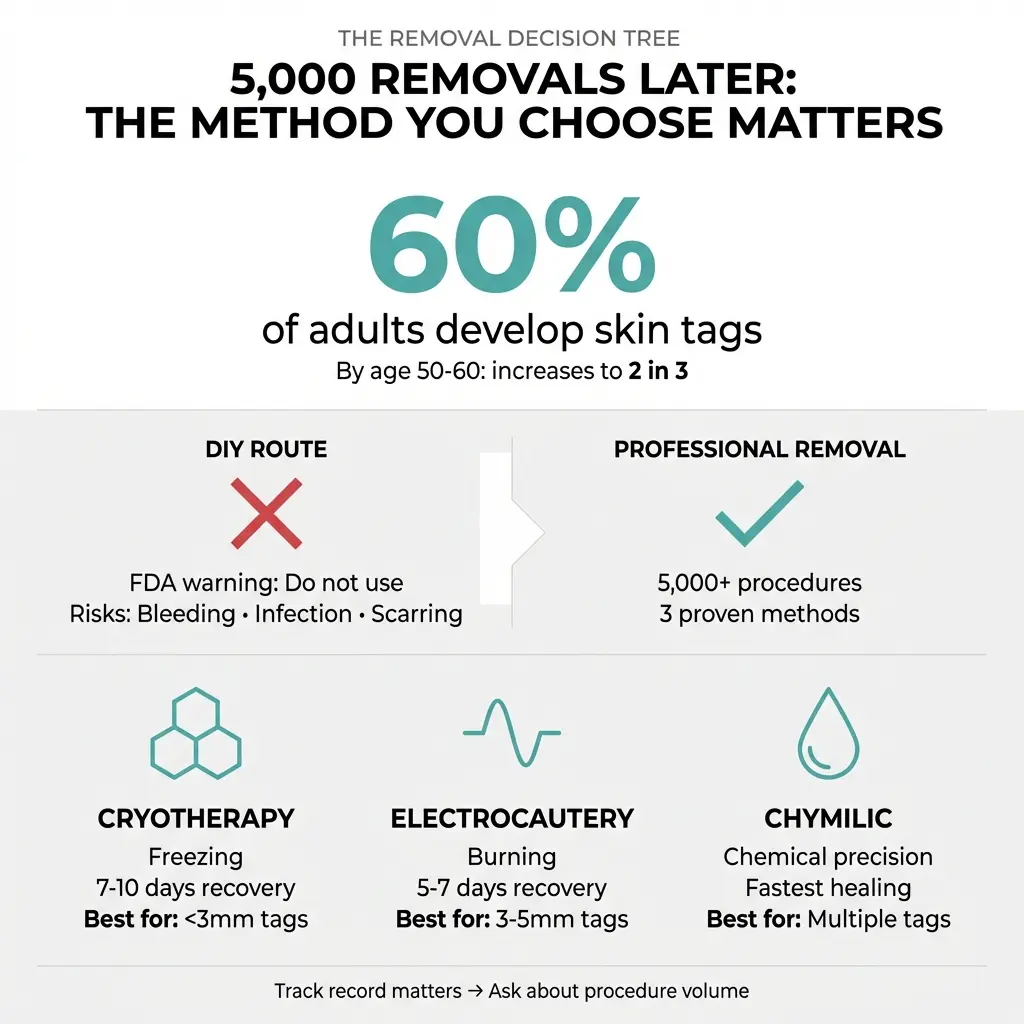
Between 50% and 60% of adults develop at least one skin tag during their lifetime. By age 50 to 60, two-thirds of all individuals have them.
This isn’t rare.
Medical research shows multiple skin tags correlate with insulin resistance, independent of other risk factors. Links exist to abnormal lipid profiles, type 2 diabetes, cardiovascular disease, and obesity.
Your skin tags signal what’s happening inside your body.
What This Means: Skin tags affect up to 60% of adults and often indicate metabolic health issues worth investigating with your GP.
Why Doesn’t the NHS Cover Skin Tag Removal?
You’ll pay privately for skin tag removal. The NHS classifies it as cosmetic surgery, therefore it’s rarely available through the health service.
The NHS prioritises life-threatening conditions. Resources go there first.
This creates a private market with wildly varying quality. Patients struggle to distinguish clinics following proper protocols from those that don’t.
The UK cosmetic dermatology market will surpass £3 billion by 2025. Non-surgical treatments drive most growth. Your verification tools? Google reviews and Instagram photos.
What This Means: NHS doesn’t cover removal because it’s cosmetic, creating a £3 billion private market where quality verification is difficult.
Why Are DIY Removal Methods Dangerous?
The U.S. Food and Drug Administration warns against over-the-counter skin tag removal products. The FDA has not approved these products. They explicitly warn against them because of documented harm.
The regulatory body protecting public health reviewed these products: Don’t use them.
Here’s what happens when people ignore the warning:
- Significant bleeding: Cutting skin tags incorrectly severs blood vessels without proper cauterisation
- Infection risk: Non-sterile tools introduce bacteria directly into open wounds
- Chemical burns: Harsh acids and oils cause tissue damage and long-term pigmentation issues
- Scarring: Improper removal techniques leave permanent marks in visible areas
You wouldn’t do dental surgery on yourself. You wouldn’t remove a mole with kitchen scissors. Skin tag removal gets marketed as something you handle at home with a £12 Amazon kit.
Data from 5,000 removals tells a different story.
What This Means: FDA explicitly warns against DIY products because they cause bleeding, infection, chemical burns, and permanent scarring in visible areas.
What Are the Professional Removal Methods?
Professional removal is safer. It’s faster. It leaves better results.
Data shows three treatment methods work:
Cryotherapy (Freezing)
Best for: Tags under 3mm
Recovery averages 7-10 days with minimal scarring when done right. Liquid nitrogen freezes the tissue. The skin tag falls off naturally.
You’ll feel brief stinging. The area blisters slightly. Within 7-10 days, the tag is gone.
Electrocautery (Burning)
Best for: Tags 3-5mm
Patients report slight discomfort during the procedure. Healing is faster than cryotherapy at 5-7 days. The electrical current cauterises while removing. Less bleeding. Lower infection risk.
Chymilic Treatment
Best for: Multiple tags or sensitive areas (eyelids, neck folds)
This shifts the conversation. Removing skin tags without traditional method downsides.
Chymilic treatment uses specialised chemical application targeting skin tag tissue without damaging surrounding skin. Precision matters for eyelids, neck folds, and locations where scarring shows.
The recovery profile differs. No frozen tissue needing to slough off. No burnt areas needing to heal. Chymilic solution works at cellular level, breaking down tissue while minimising inflammation and speeding healing.
For patients with multiple skin tags (common), this approach treats several areas in one session. No cumulative trauma from repeated freezing or burning.
What This Means: Three methods work best based on size and location. Cryotherapy (7-10 days), electrocautery (5-7 days), and Chymilic treatment (fastest healing, best for multiple tags).
How Do You Choose a Clinic in London or Essex?
You live in one of the UK’s most competitive healthcare markets. Within 10 miles of central London, dozens of clinics offer skin tag removal.
Good for pricing. Terrible for quality control.
Look for these factors when evaluating providers:
Track record: How many procedures have they done? The learning curve is real. A practitioner with 50 removals has seen complications. One with 5,000 has seen everything.
Treatment options: A clinic offering one method will use that method whether it’s right for you or not. You need options based on your situation.
Aftercare protocol: Professional removal doesn’t end when you leave. You need clear wound care instructions, infection warning signs, and follow-up availability if healing goes wrong.
Transparent pricing: If you need a consultation to learn prices, that’s a red flag. Reputable clinics publish rates because they’re confident in their value.
What This Means: Choose clinics with 1,000+ procedures performed, multiple treatment options, clear aftercare protocols, and transparent pricing published online.
What Should You Do Next?
You’ve done the research. You understand DIY risks and why the NHS won’t cover the procedure. You know what treatment methods exist and what they’re suited for.
Now make a decision.
Book a consultation with a clinic that’s performed thousands of removals. Ask about Chymilic treatment experience, particularly if you have multiple tags or tags in sensitive areas. Get clear understanding of procedure, recovery time, and total cost before committing.
Skin tags don’t go away on their own. They typically increase in number and size over time. The longer you wait, the more you’ll need removed.
Ready to move forward? Book your skin tag removal consultation with a clinic that’s removed over 5,000 skin tags across London and Essex. You’ll get a treatment plan based on your situation, not a one-size-fits-all approach.
Frequently Asked Questions About Skin Tag Removal
Does skin tag removal hurt?
Most procedures involve minimal discomfort. Cryotherapy causes brief stinging. Electrocautery creates slight burning sensation. Chymilic treatment is least uncomfortable. Local anaesthetic is available for sensitive areas.
How much does professional skin tag removal cost in London?
Prices vary by clinic, number of tags, and method used. Single tag removal ranges £50-£150. Multiple tag sessions cost £200-£500. Reputable clinics publish pricing online. Avoid clinics hiding costs until consultation.
Will skin tags grow back after removal?
Removed skin tags don’t grow back in the same spot. New ones might develop elsewhere because the underlying factors (genetics, insulin resistance, friction) remain. Proper removal eliminates individual tags permanently.
How long does recovery take?
Recovery depends on method. Cryotherapy takes 7-10 days. Electrocautery takes 5-7 days. Chymilic treatment heals fastest with minimal inflammation. Follow aftercare instructions to prevent infection and speed healing.
Are skin tags linked to other health conditions?
Yes. Multiple skin tags correlate with insulin resistance, type 2 diabetes, abnormal lipid profiles, and cardiovascular disease. If you develop many tags, talk to your GP about metabolic health screening.
What’s the difference between a skin tag and a wart?
Skin tags are soft, flesh-coloured, and hang from a thin stalk. Warts are rough, firm, and flat or raised. Warts are viral. Skin tags aren’t contagious. If you’re unsure, get professional diagnosis before removal.
When should I see a doctor instead of getting removal?
See a healthcare provider if your skin tag changes size fast, changes colour, bleeds on its own, or becomes painful. These signs point to other conditions needing medical evaluation before cosmetic removal.
Why doesn’t the NHS remove skin tags?
The NHS classifies skin tag removal as cosmetic surgery. They prioritise resources for life-threatening conditions. You’ll need private treatment unless your skin tag causes medical complications like repeated bleeding or interference with movement.
Key Takeaways
- Professional removal is safer and more cost-effective than DIY methods when you factor in complication risks
- Three proven methods exist: cryotherapy for small tags (7-10 days recovery), electrocautery for medium tags (5-7 days), and Chymilic treatment for multiple tags or sensitive areas (fastest healing)
- 50-60% of adults develop skin tags, often signalling insulin resistance or metabolic conditions worth investigating
- FDA explicitly warns against over-the-counter removal products because they cause bleeding, infection, burns, and scarring
- Choose clinics with 1,000+ procedures performed, multiple treatment options, transparent pricing, and clear aftercare protocols
- Skin tags increase in number and size over time if left untreated
- NHS doesn’t cover removal because it’s classified as cosmetic, creating a private market where quality varies
💡 Important: Skin tags sometimes resemble other skin conditions requiring medical evaluation. If you notice rapid size changes, colour changes, or if a tag becomes painful or bleeds spontaneously, consult a healthcare provider before pursuing removal.