

TL;DR: Clinical data from 477 HIFU patients reveals moderate but measurable results: 18-30% improvement in skin laxity, 78-80% patient satisfaction, and results lasting up to 18 months. HIFU costs 77% less than surgical facelifts, requires zero downtime, and shows fewer than 5% side effects. Peak results appear at 6 months, making it ideal for mild to moderate skin tightening in the face and neck.
What HIFU Actually Delivers:
- Moderate improvements: 18-30% reduction in skin laxity, not dramatic transformation
- Timeline: Initial results at 2-3 months, peak results at 6 months, lasting up to 18 months
- Safety: Fewer than 5% experience mild side effects (redness, swelling)
- Cost: 77% less expensive than surgical facelifts (£1,300 vs. £5,800 average)
- Convenience: 30-90 minute sessions with zero recovery time required
We analysed clinical studies, market reports, and patient outcomes data to understand what actually happens when you choose HIFU treatment.
The numbers reveal a clear picture about effectiveness, safety, and whether this treatment delivers on its promises.
What Do Clinical Studies Reveal About HIFU Effectiveness?
A comprehensive review tracking 477 HIFU patients found measurable results that differ from marketing promises.
Physicians rated objective improvements at 2.74 out of 5. Patient satisfaction came in at 2.68 out of 5.
For facial and neck treatments specifically, physicians reported an 80% improvement rate. Patient satisfaction reached 78%.
These numbers reveal an important truth: HIFU works, but it delivers moderate improvements, not dramatic transformations.
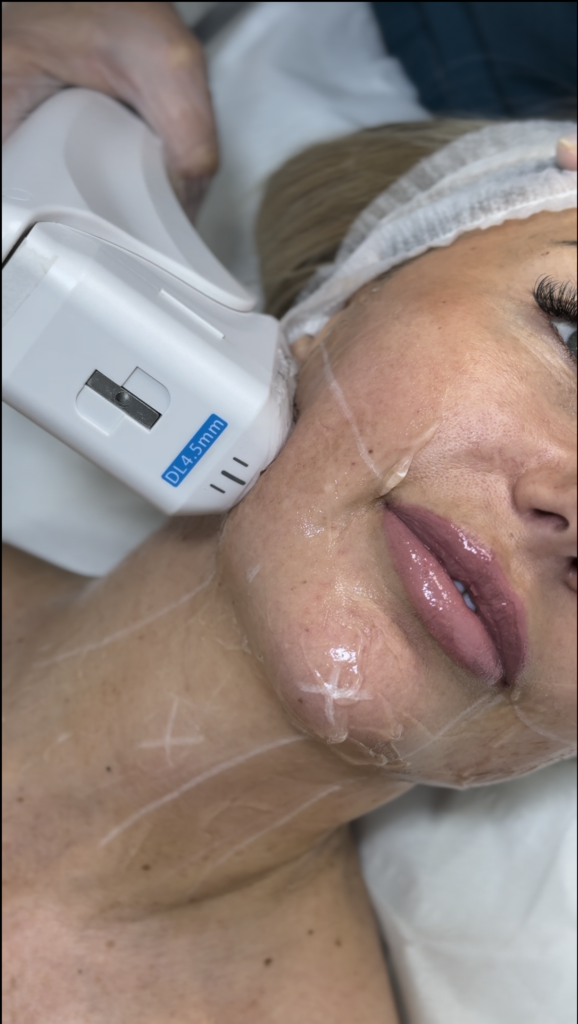
The treatment targets depths of 1.5mm to 4.5mm beneath your skin. It reaches the SMAS layer—the same layer surgeons address during facelifts. But HIFU achieves this without incisions, without scarring, and without the recovery time surgery demands.
Clinical studies show skin laxity improvements ranging from 18% to 30%. Results are particularly effective in the lower face, neck, and around the eyes.
The data is measurable and real. But HIFU is not a facelift replacement—it’s a strategic alternative for moderate skin tightening.
Bottom Line: Clinical evidence confirms HIFU delivers moderate, measurable improvements (18-30% laxity reduction) with high patient satisfaction (78-80%), making it effective for patients with realistic expectations. Understanding these clinical realities is essential when considering HIFU treatment.
How Long Does HIFU Take to Work and How Long Do Results Last?

Marketing materials often stay deliberately vague about HIFU timelines. The clinical data provides clarity.
You might see some immediate tightening after your session. However, primary benefits appear within two to three months because your collagen production must accelerate first. Optimal results typically peak around the six-month mark.
Results can last up to 18 months.
Many patients require only annual touch-ups to maintain their refreshed appearance. Leading UK aesthetic practitioners confirm these timelines. With proper skincare maintenance, results can be sustained for a year or longer.
Therefore, HIFU requires patience and realistic expectations. The treatment works with your body’s natural healing processes, not against them.
Quick Facts: HIFU results appear gradually (2-3 months for initial benefits, 6 months for peak results) and last up to 18 months with annual maintenance because collagen remodelling takes time.
Is HIFU Safe? What Are the Side Effects?
Fewer than 5% of patients report transient side effects. These include mild redness or swelling.
This represents an excellent safety profile compared to surgical alternatives. No incisions means no scarring. No anesthesia means no related risks. No recovery time means you return to your daily routine immediately after your 30-90 minute session.
London and Essex professionals appreciate this “lunchtime facelift” convenience because extended downtime isn’t required.
Key Safety Point: HIFU shows fewer than 5% side effects with zero scarring or anesthesia risks, offering superior safety compared to surgical facelifts.
How Much Does HIFU Cost Compared to Surgery?
Non-surgical skin tightening procedures average £1,300. In contrast, surgical facelifts average £5,800.
HIFU costs approximately 77% less than surgery. This price difference eliminates surgical risks, scarring, and extended recovery time.
For London and Essex’s cost-conscious yet quality-focused demographic, this represents exceptional value. However, you must understand what you’re actually paying for.
You’re not buying surgical-level results. You’re buying measurable improvement without the surgical commitment. You’re buying 18 months of enhanced appearance with annual maintenance. You’re buying convenience and safety.
At Shumaila’s Clinics, we’re transparent about what HIFU delivers—moderate, measurable improvements for patients with realistic expectations.
Value Summary: At 77% less than surgery (£1,300 vs. £5,800), HIFU offers significant cost savings while delivering moderate improvements without surgical risks or downtime.
Why Is HIFU Demand Growing in London?
Greater London and the surrounding areas, including Essex, account for the highest number of cosmetic procedures in the UK. These regions demonstrate considerably higher search volumes for aesthetic treatments than any other part of the country.
London is experiencing 4% growth in aesthetic treatment demand.
The UK aesthetics market is valued at £3.6 billion annually as of 2024-2025. 7.7 million people (11% of the population) underwent aesthetic treatments in 2023. An additional 13.9 million people—one in five—are considering treatments.
This represents six million potential new clients who haven’t yet converted.
London and Essex prove particularly lucrative for aesthetic clinics because of high disposable incomes amongst residents. Non-surgical facial and body treatments are especially popular. Patients appreciate being able to “pop out for lunch and return” with visible improvements.
Therefore, HIFU’s no-downtime promise aligns perfectly with this demand.
How Does Social Media Drive HIFU Demand?
58% of Brits aged 18-24 and 55% aged 25-34 cite feeling societal pressure to improve their appearance. 33% say social media has influenced their decision to want cosmetic procedures.
This social media-driven demand creates perfect conditions for promoting HIFU’s photogenic, natural-looking results to London and Essex’s digitally-engaged population.
Non-surgical aesthetic procedures increased globally by 57.8% between 2018 and 2022. Traditional procedures like facelifts are being outperformed by time-efficient alternatives. London clinics have seen uptakes of nearly 300% since 2019.
These numbers reflect changing societal values that prioritize maximizing time.
Market Insight: London and Essex’s share of the UK’s £3.6 billion aesthetics market shows 4% growth, with 7.7 million people already using treatments and 13.9 million considering them, driven by social media influence and demand for convenient procedures.
What Are the Best Practices for HIFU Treatment?
Set realistic expectations from the start. HIFU delivers moderate improvements (18-30% reduction in skin laxity), not dramatic transformations. Patients who understand this report higher satisfaction rates.
Plan for the timeline. Initial results appear at 2-3 months. Peak results occur at 6 months. Annual maintenance treatments sustain results for 18+ months. At Shumaila’s Clinics, we guide patients through realistic timelines from consultation to peak results.
Target the right candidates. HIFU works best for mild to moderate skin laxity in the lower face, neck, and periorbital regions. It’s not appropriate for severe sagging or significant volume loss.
Emphasise the convenience factor. London and Essex professionals value treatments that fit into their schedules. The 30-90 minute session with zero downtime is a genuine competitive advantage.
Position HIFU as preventative. The 2024 UK aesthetics industry saw a 25-27% increase in “natural response treatments” like HIFU. Younger demographics (18-34) are driving demand for preventative, subtle treatments rather than corrective procedures.
Leverage the safety profile. Fewer than 5% transient side effects, no scarring, no anesthesia risks. This matters to risk-averse patients who want improvement without surgical commitment.
Be transparent about costs and value. At 77% less than surgical alternatives, HIFU offers clear financial advantages. However, frame this as value for moderate improvement, not a cheap alternative to surgery.
Practice Summary: Success with HIFU requires setting realistic expectations (moderate improvement), targeting appropriate candidates (mild to moderate laxity), and emphasising convenience, safety, and preventative benefits.
What Do Growth Projections Show for HIFU Treatment?

The UK cosmetic surgery market is projected to grow at a 7.64% compound annual growth rate from 2025 to 2035.
Industry experts anticipate continued surge in demand for minimally invasive procedures with accelerated recovery times throughout 2025 and beyond. The emphasis remains on subtle, preventative treatments because younger demographics continue driving demand.
HIFU is positioned perfectly for London’s multi-generational market.
The treatment appeals to younger patients seeking preventative care and older patients who want improvement without surgery. It fits the time constraints of busy professionals and the budget considerations of cost-conscious consumers across London and Essex.
However, success depends on honest positioning. The clinics that thrive will be the ones that set accurate expectations, deliver consistent results, and build trust through transparency rather than overpromising.
That’s what the data shows. That’s what 477 patients taught us. And that’s what London’s market demands.
Future Outlook: With 7.64% annual growth projected through 2035 and increasing demand for minimally invasive treatments, HIFU’s market position strengthens for multi-generational appeal through transparent, honest positioning.
Frequently Asked Questions About HIFU Treatment
Does HIFU actually work for skin tightening?
Yes. Clinical studies tracking 477 patients show HIFU delivers 18-30% improvement in skin laxity. Physicians report 80% improvement rates for facial and neck treatments, with 78% patient satisfaction. However, HIFU produces moderate improvements, not dramatic transformations like surgical facelifts.
How long before I see HIFU results?
You may notice some immediate tightening, but primary results appear at 2-3 months. Peak results occur at 6 months because collagen production must accelerate first. The treatment works with your body’s natural healing processes, therefore requiring patience.
Who is the ideal candidate for HIFU?
HIFU works best for patients with mild to moderate skin laxity in the lower face, neck, and eye areas. It’s not appropriate for severe sagging or significant volume loss. The treatment is ideal for both younger patients seeking preventative care and older patients wanting improvement without surgery.
Is HIFU painful or does it have downtime?
Sessions last 30-90 minutes with zero recovery time. Fewer than 5% of patients experience mild side effects like redness or swelling. You can return to your daily routine immediately, making it a true “lunchtime facelift.”
How much does HIFU cost in London?
HIFU averages £1,300, which is 77% less expensive than surgical facelifts (£5,800 average). This price eliminates surgical risks, scarring, and recovery time whilst delivering moderate, measurable improvements. Shumaila’s Clinics offers transparent pricing and honest consultations about what HIFU can achieve for your specific needs.
How often do I need HIFU treatments?
Results last up to 18 months. Most patients require only annual touch-ups to maintain their refreshed appearance. With proper skincare maintenance, results can be sustained for a year or longer.
Can HIFU replace a facelift?
No. HIFU is not a facelift replacement—it’s a strategic alternative for moderate skin tightening. The treatment reaches the same SMAS layer surgeons target but delivers 18-30% improvement rather than surgical-level transformation. It’s designed for patients who want measurable improvement without surgical commitment.
Why is HIFU so popular in London and Essex?
London and Essex account for the highest number of cosmetic procedures in the UK, with 4% growth in aesthetic treatment demand. These areas’ high disposable incomes and busy professionals drive demand for convenient, no-downtime treatments. HIFU aligns perfectly with the “pop out for lunch and return” convenience that patients in these regions prefer.
Key Takeaways
- Moderate, measurable results: HIFU delivers 18-30% reduction in skin laxity with 78-80% patient satisfaction, not dramatic surgical-level transformation.
- Timeline requires patience: Initial results appear at 2-3 months, peak results at 6 months, lasting up to 18 months with annual maintenance.
- Superior safety profile: Fewer than 5% experience mild side effects, with zero scarring, no anesthesia risks, and no recovery time required.
- Significant cost savings: At £1,300 average, HIFU costs 77% less than surgical facelifts (£5,800), eliminating surgical risks and downtime.
- Ideal for realistic expectations: Best suited for mild to moderate skin laxity in the face and neck, targeting patients who want improvement without surgical commitment.
- Market momentum in London and Essex: The UK’s £3.6 billion aesthetics market shows 7.64% annual growth through 2035, with London and Essex leading demand for convenient, minimally invasive treatments.
- Transparency drives success: Clinics that set accurate expectations and build trust through honest positioning will thrive in London and Essex’s competitive, sophisticated market.