


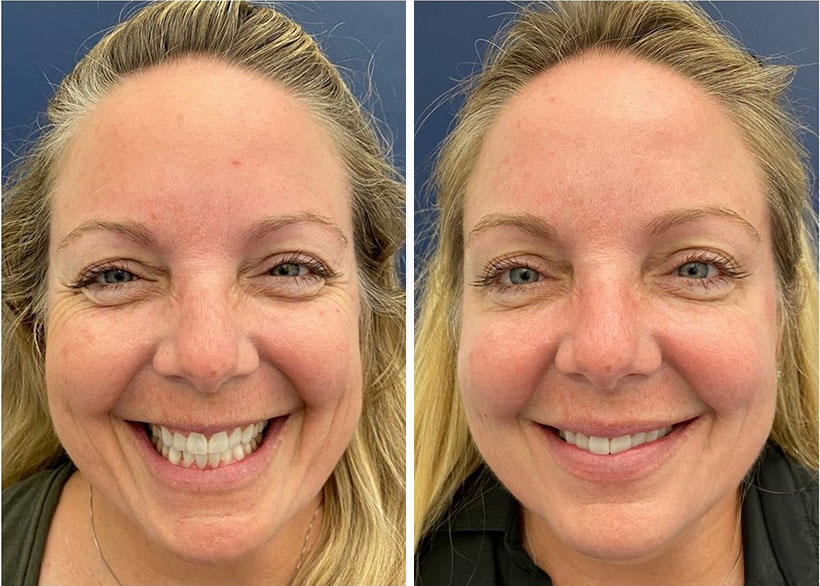
TL;DR: Crow’s feet are the number one aesthetic concern for 82% of women seeking treatment. They form from repeated muscle contractions, collagen loss (1% per year after age 20), and UV damage (responsible for 80% of visible aging). Botox remains the most effective treatment for dynamic wrinkles, with 67.9% of patients showing mild or no lines after 30 days. Combining Botox with dermal fillers addresses both dynamic and static wrinkles for comprehensive results.
Quick Answer:
- Crow’s feet affect 60% of people by age 40-50, rising to 80-90% by age 60
- UV exposure causes 80% of visible skin aging around the eyes
- Botox is the gold standard treatment, with results lasting 3-6 months
- Combining Botox with fillers treats both dynamic lines (when moving) and static lines (at rest)
- Prevention includes sun protection, consistent skincare, and early strategic Botox use
Why Do 82% of Women Choose Crow’s Feet Treatment First?
In a study of 603 women ages 30-65 considering aesthetic treatments, 82% identified crow’s feet as their top priority. Not forehead lines. Not nasolabial folds. The fine lines radiating from eye corners topped every other concern.
This statistic reveals how significantly these wrinkles affect self-perception and confidence.
Bottom line: Crow’s feet are the most common first-choice treatment area because they’re highly visible and age the face noticeably.
What Causes Crow’s Feet to Form?

Muscle Contractions Create Memory Lines
Every time you smile, squint, or laugh, the orbicularis oculi muscle contracts. Repeat this thousands of times over years, and the skin develops permanent lines.
By age 40-50, over 60% of people have visible crow’s feet. By age 60, that number jumps to 80-90%.
Collagen Loss Accelerates After Age 20
Starting in your mid-20s, collagen production decreases by approximately 1% per year. The decline becomes visible around age 40-50, when crow’s feet deepen noticeably.
In sun-protected skin of individuals 80 years or older, collagen production drops by approximately 75% compared to younger adults.
Key insight: Crow’s feet form from repeated muscle movement combined with progressive collagen loss starting in your 20s.
How Does UV Damage Accelerate Crow’s Feet?
UV exposure is responsible for about 80% of visible signs of aging skin. The eye area is particularly vulnerable because the skin there is thinner.
UV radiation does two things simultaneously:
- Breaks down existing collagen and elastin fibers
- Inhibits production of new collagen
You’re losing what you have while your body produces less to replace it. This compounding effect accelerates wrinkle formation around the eyes faster than almost anywhere else on the face.
What this means: Sun damage is the primary driver of premature crow’s feet formation, making daily SPF non-negotiable.
Do Men and Women Get Crow’s Feet Differently?
Gender Differences in Crow’s Feet Formation
Crow’s feet tend to appear earlier and form deeper wrinkles in men than in women. Research points to two main factors:
- Less consistent sunscreen use in men
- Higher levels of collagen-degrading enzymes called matrix metalloproteinases (MMPs)
Men naturally have higher amounts of these enzymes, which break down collagen more aggressively.
Ethnicity Affects Crow’s Feet Prevalence
Studies show crow’s feet were prevalent in nearly 100% of French women aged 30-40, whereas Chinese women showed only 50% prevalence in the same age group.
These variations relate to differences in skin structure, sun exposure patterns, and genetic factors.
Key point: Men develop crow’s feet earlier and deeper than women because of behavioral and enzymatic differences.
What Is the Most Effective Treatment for Crow’s Feet?

Botox: The Gold Standard Treatment
Botox remains the most effective treatment for dynamic wrinkles (lines that appear when you move your face). At Shumaila’s Clinic, we’ve seen consistently excellent results with this approach.
In clinical studies with nearly 1,000 participants, 67.9% had mild or no crow’s feet lines at day 30 after treatment.
Treatment timeline:
- Significant improvement visible within one week
- Peak effects at 4 weeks
- Median duration of response: 4 months or longer
Botox works by temporarily relaxing the muscles that create wrinkles. When the muscle contractions weaken, the overlying skin smooths out.
Clinical evidence: Botox is the only treatment proven to reduce dynamic crow’s feet with visible results in one week. Book a consultation to discuss whether this treatment is right for you.
What About Static Wrinkles That Are Always Visible?

Combining Botox with Dermal Fillers
Static wrinkles (lines visible even when your face is relaxed) require a different strategy. Botox alone won’t fill in already-etched lines.
Clinical research confirms that combining Botox with dermal fillers addresses both dynamic and static wrinkles comprehensively. This dual approach is now considered the gold standard. During your consultation at Shumaila’s Clinic, we’ll assess which combination suits your needs.
How the combination works:
- Botox relaxes muscles causing dynamic lines (results last 3-6 months)
- Hyaluronic acid-based fillers restore volume and stimulate collagen production (effects last 6-12 months or longer)
The filler fills in etched lines while encouraging your skin to produce more structural support.
Evidence-based approach: Combining treatments addresses multiple causes of crow’s feet for longer-lasting, more comprehensive results.
Is Laser Resurfacing Worth the Downtime?
Ablative Laser Treatment for Advanced Cases
Ablative laser resurfacing produces dramatic effects, potentially making skin look 10-20 years younger with results lasting up to 10 years.
The laser removes damaged outer layers of skin and stimulates deep collagen production.
The trade-off: Recovery time takes several weeks, making this option less practical for people with busy schedules.
Combining Laser with Botox
When we combine laser resurfacing with Botox, we address both the texture and the movement component of crow’s feet. The results often transform the entire eye area.
When to consider laser: For significant sun damage and texture issues beyond standard wrinkles, laser resurfacing provides results other treatments don’t achieve.
How Should You Choose the Right Treatment?
The Treatment Hierarchy Based on Severity
We approach crow’s feet treatment with a hierarchy based on severity and goals:
Stage 1 (Early dynamic wrinkles): Botox alone often produces excellent results.
Stage 2 (Dynamic and static components): Combine Botox with fillers for comprehensive correction.
Stage 3 (Significant sun damage and texture issues): Add laser resurfacing to the protocol.
Your skin type, wrinkle pattern, and lifestyle all factor into the treatment plan.
Treatment principle: Match the intervention intensity to wrinkle severity for optimal results with minimal downtime.
Does Preventative Botox Actually Work?
Starting Treatment Before Deep Lines Form
Preventative Botox (starting in your late 20s or early 30s) slows the formation of deep-set wrinkles by reducing repetitive muscle contractions.
However, it doesn’t stop the aging process or compensate for sun damage.
The most effective prevention strategy combines:
- Daily broad-spectrum sun protection (SPF 30 or higher)
- Consistent skincare with retinoids and antioxidants
- Strategic use of neuromodulators before lines become deeply etched
Prevention insight: Early intervention prevents deep wrinkles better than treating established ones later.
What Happens During Your First Consultation at Shumaila’s Clinic?
Comprehensive Assessment Factors
During your consultation at Shumaila’s Clinic, we assess several factors:
- Depth and pattern of existing lines
- Skin texture and elasticity
- Muscle activity around the eyes
- Sun damage and pigmentation
- Your aesthetic goals and lifestyle constraints
Based on this assessment, we recommend a treatment approach that balances effectiveness with practicality. Learn more about our crow’s feet treatment options.
Some clients want maximum results regardless of downtime. Others need treatments that fit around work and social commitments. Both approaches are valid.
Consultation goal: Create a personalized treatment plan aligned with your specific wrinkle pattern and lifestyle needs.
Frequently Asked Questions About Crow’s Feet Treatment
At what age do crow’s feet typically appear?
Crow’s feet typically become visible between ages 40-50, affecting over 60% of people. By age 60, 80-90% show visible crow’s feet. However, people with significant sun exposure or expressive faces notice them earlier, sometimes in their 30s.
How long does Botox last for crow’s feet?
Botox for crow’s feet typically lasts 3-6 months, with a median duration of 4 months. Results become visible within one week and peak at 4 weeks post-treatment. Regular maintenance treatments help sustain results over time.
Does Botox prevent crow’s feet from getting worse?
Yes. Botox reduces muscle contractions that create crow’s feet, therefore slowing the formation of deeper wrinkles. Starting preventative Botox in your late 20s or early 30s prevents lines from becoming permanently etched into the skin. Schedule a consultation at Shumaila’s Clinic to discuss preventative treatment options.
What’s the difference between dynamic and static crow’s feet?
Dynamic crow’s feet appear only when you smile or squint because of muscle movement. Static crow’s feet remain visible even when your face is relaxed because they’ve etched into the skin. Botox treats dynamic lines, while fillers address static lines.
Are there any side effects of crow’s feet treatment?
Botox side effects are typically mild and temporary, including minor bruising, swelling, or tenderness at injection sites. Rare complications include eyelid drooping (less than 5% of cases) which resolves within weeks. Filler side effects are similar, with additional risk of minor lumps that massage out easily.
How much does crow’s feet treatment cost?
Treatment costs vary based on the approach. Botox for crow’s feet typically ranges from £150-£350 per treatment session. Adding dermal fillers increases costs to £400-£800. Laser resurfacing is more expensive, ranging from £1,000-£3,000, but results last significantly longer. Book a consultation at Shumaila’s Clinic for personalized pricing.
Do over-the-counter creams work for crow’s feet?
Over-the-counter creams provide hydration and slight improvement in fine lines but don’t address the underlying causes of crow’s feet. They’re helpful for prevention and maintenance but won’t eliminate established wrinkles the way professional treatments do.
Who shouldn’t get Botox for crow’s feet?
Pregnant or breastfeeding women should avoid Botox. People with certain neurological conditions, allergies to botulinum toxin, or active skin infections near treatment areas aren’t good candidates. A thorough consultation at Shumaila’s Clinic determines if Botox is safe for you.
Key Takeaways
- Crow’s feet are the top aesthetic concern for 82% of women seeking treatment, appearing in 60% of people by age 40-50
- Three primary causes drive crow’s feet formation: repeated muscle contractions, collagen loss (1% yearly decline after age 20), and UV damage (responsible for 80% of visible aging)
- Botox is the gold standard treatment for dynamic wrinkles, with 67.9% of patients showing mild or no lines at 30 days post-treatment
- Combining Botox with dermal fillers addresses both dynamic and static wrinkles for comprehensive, longer-lasting results
- Preventative treatment starting in your late 20s or early 30s slows deep wrinkle formation more effectively than treating established lines later
- Treatment selection depends on wrinkle severity: Botox alone for early lines, Botox plus fillers for mixed concerns, and laser resurfacing for advanced sun damage
- Daily sun protection remains the single most effective prevention strategy, more important than any treatment for long-term skin health
Crow’s feet represent the intersection of muscle movement, collagen loss, and cumulative sun damage. Treating them effectively requires addressing all three factors with evidence-based approaches.
If you’re among the 82% of people who identify crow’s feet as your primary concern, you have proven treatment options backed by solid science and measurable results.
Ready to discuss your specific situation? Book a consultation at Shumaila’s Clinic. We serve clients throughout London, Essex, and surrounding areas with personalized treatment plans based on clinical evidence and your individual goals.