

TL;DR: London’s pollution increases hyperpigmentation by up to 25% through nitrogen dioxide and particulate matter exposure. Evidence-based treatments like laser therapy and chemical peels show 60%+ improvement in 12 weeks when personalised for your skin type and combined with environmental protection strategies.
Dark patches getting worse since you moved to London? You’re not alone.
London’s environment accelerates hyperpigmentation more than most people realise. We see clients weekly who’ve tried every Boots cream with no results. Their skin keeps darkening.
At Shumaila’s Clinic, we address what’s happening to your skin in this specific environment.
How Does London’s Environment Affect Hyperpigmentation?
Research shows nitrogen dioxide exposure increases pigment spots on your cheeks by up to 24-25%. London struggles with this pollutant, especially around major roads like the A40 and North Circular.
Particulate matter from diesel vehicles and the Tube penetrates your skin. This causes a 52% rise in age spots after heightened exposure.
When pollutants penetrate skin, they activate inflammatory pathways. They trigger melanocyte stimulation. This creates melasma, age spots, and diffuse facial pigmentation.
Your skin responds to what you encounter daily in the city.
Bottom line: London’s pollution directly worsens hyperpigmentation through measurable biological pathways, which is why we factor environmental exposure into every treatment plan.
What Is the Psychological Impact of Hyperpigmentation?
The numbers tell a story:
- 15% of people with hyperpigmentation experience very low self-esteem
- They report persistent feelings of inadequacy and emotional distress
- Another 30% report low self-esteem with social discomfort
- Many feel self-conscious in public settings
When you avoid mirrors or feel anxious before social events, your quality of life suffers. The psychological impact matters as much as the visible symptoms.
This is why our approach starts with listening to what you’re experiencing, not simply examining your skin.
What this means for you: We treat the emotional impact alongside the physical symptoms because both affect your wellbeing.
What Hyperpigmentation Treatments Work Best?
The hyperpigmentation treatment market reached £1.1 billion in 2024. It will hit £1.6 billion by 2030. This growth reflects genuine demand for solutions that work.
Energy-based therapies dominate the market at 68.4% because they deliver results.
Our hyperpigmentation treatments include:
- Fractional laser therapy
- Chemical peels
- Microneedling
We use these because clinical studies back them up, not because they’re trendy Instagram treatments.
Clinical Results After 12 Weeks
- Laser therapy: 62.9% reduction in melasma severity
- Glycolic acid peels: 58.7% reduction in melasma severity
Both approaches work when applied correctly for your specific skin type and condition. We adjust our protocols for the diverse skin tones we see across London.
We analyse your skin first, then recommend what will address your specific pigmentation pattern.
The takeaway: Evidence-based treatments show measurable improvements when personalised to your skin type, which is why we never push a single solution for everyone.
How Do We Build Your Hyperpigmentation Treatment Plan?
Step 1: Skin Analysis
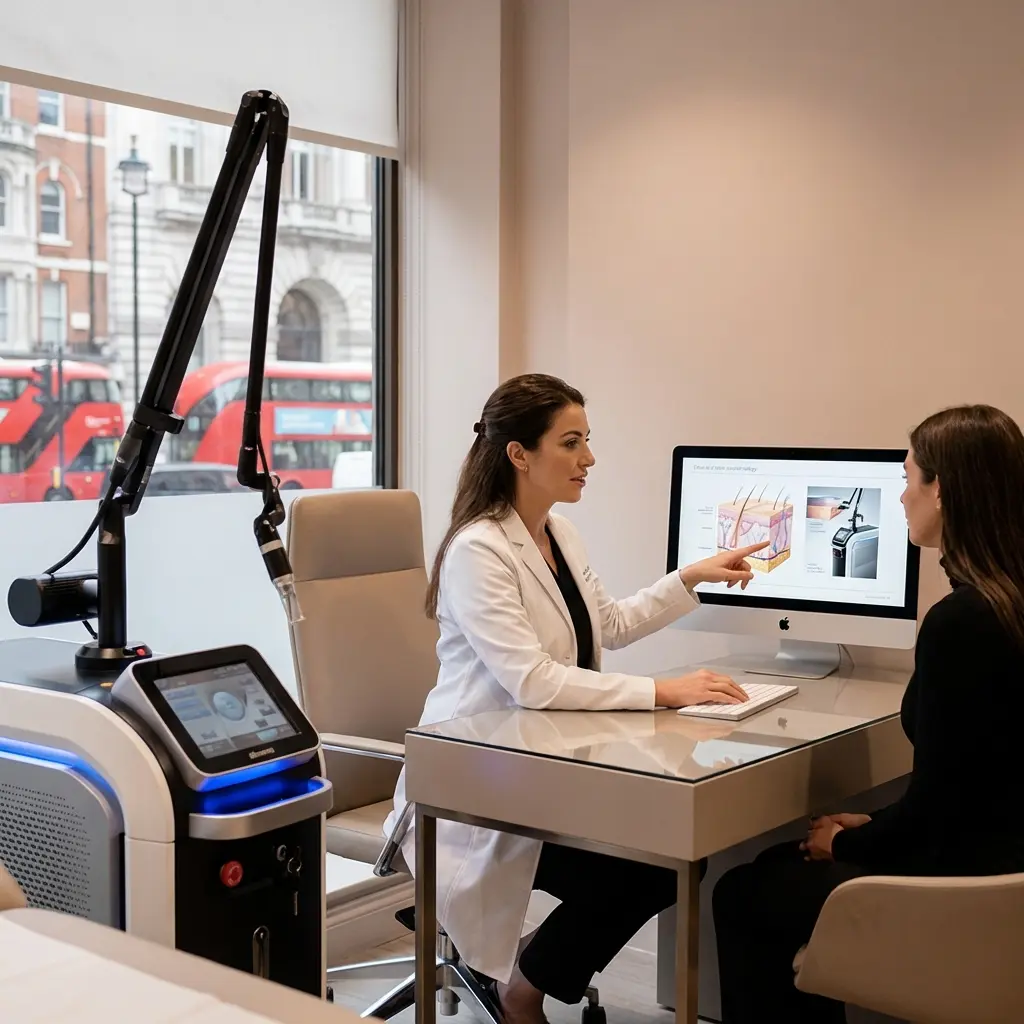
We conduct a thorough skin analysis to identify the type and depth of your hyperpigmentation.
Step 2: Personalised Treatment Plan
We create a treatment plan tailored to you. This might combine:
- Laser therapy
- Chemical peels
- Specialised skincare products
Step 3: Environmental Protection Education
We educate you about protecting your skin from London’s environmental stressors between sessions.
Aftercare matters as much as treatment. Sun protection and proper skincare routines prevent new pigmentation from forming while we address existing concerns.
We focus on sustainable results, not quick fixes that fade in weeks.
Key point: Your treatment plan combines clinical procedures with daily protection strategies because treating existing pigmentation while preventing new damage delivers lasting results.
Why Does Technology Matter in Hyperpigmentation Treatment?
Technological advancement in non-invasive treatments has made hyperpigmentation therapy more effective and accessible.
We invest in equipment that delivers consistent results with minimal downtime. You don’t have weeks to recover from treatment.
You need treatments calibrated for your skin tone and type. What works for fair skin might cause complications for darker skin tones.
Our technology allows us to adjust parameters precisely for your needs. This precision reduces the risk of post-inflammatory hyperpigmentation, which worsens the original problem.
Why this matters: Adjustable technology prevents treatment complications and ensures safe, effective results across all skin tones.
What Should You Expect During Treatment?
Your First Consultation
Your first visit involves a detailed conversation about:
- Your skin history
- Your lifestyle
- Your goals
We examine your skin under specialised lighting to assess pigmentation depth and distribution.
We explain what we see, what’s causing it, and what we can realistically achieve. No exaggerated promises or pressure to sign up on the spot.
Treatment Timeline
Treatment timelines vary based on your specific condition.
- Some clients see improvement in weeks
- Others need several months of consistent treatment
We’ll tell you what to expect, including realistic costs, based on your individual assessment.
Between Sessions
We provide clear guidance on skincare products and sun protection.
London’s environment means you need a defence strategy, not solely treatment. Yes, even in grey, drizzly weather, UV exposure affects your skin.
In short: We provide transparent timelines, honest cost expectations, and ongoing support between treatments because informed clients get better results.
Frequently Asked Questions About Hyperpigmentation Treatment in London
Does London pollution really make hyperpigmentation worse?
Yes. Research shows nitrogen dioxide exposure increases pigment spots by 24-25%, and particulate matter causes a 52% rise in age spots. London’s pollution levels, especially near major roads, directly trigger melanocyte stimulation.
How long does hyperpigmentation treatment take to show results?
Results vary by individual. Clinical studies show a 60%+ reduction in melasma severity after 12 weeks of treatment. Some clients see improvement within weeks, while others need several months of consistent treatment.
Will hyperpigmentation treatment work on my skin tone?
Yes. We adjust treatment parameters for different skin tones. What works for fair skin requires different settings for darker skin tones to prevent complications like post-inflammatory hyperpigmentation.
What’s the difference between laser therapy and chemical peels for hyperpigmentation?
Both deliver results. Laser therapy shows 62.9% reduction in melasma severity after 12 weeks. Glycolic acid peels show 58.7% reduction. We analyse your skin first to recommend the best approach for your specific pigmentation pattern.
Do I need to protect my skin from the sun in London’s cloudy weather?
Yes. UV exposure affects your skin even in grey, drizzly weather. Sun protection prevents new pigmentation from forming while we treat existing concerns.
How much does hyperpigmentation treatment cost in London?
Costs vary based on your specific condition and treatment plan. We provide realistic cost expectations during your individual assessment. No pressure to sign up on the spot.
What causes hyperpigmentation to develop?
Pollutants activate inflammatory pathways and trigger melanocyte stimulation. This creates melasma, age spots, and diffuse facial pigmentation. Environmental exposure, sun damage, and skin inflammation all contribute.
Will my hyperpigmentation come back after treatment?
Treatment addresses existing pigmentation. Ongoing protection from environmental stressors and sun exposure prevents new pigmentation from forming. We educate you about defence strategies between sessions.
Key Takeaways
- London’s pollution increases hyperpigmentation by up to 25% through nitrogen dioxide and particulate matter exposure from traffic and the Tube
- Evidence-based treatments like laser therapy and chemical peels show 60%+ reduction in melasma severity after 12 weeks when personalised for skin type
- 45% of people with hyperpigmentation experience low to very low self-esteem, making psychological support as important as physical treatment
- Technology allows precise calibration for different skin tones, preventing complications and ensuring safe results across diverse populations
- Sustainable results require combining clinical treatment with environmental protection strategies and proper sun protection, even in cloudy weather
Ready to Address Your Hyperpigmentation?
We’ve built our reputation on delivering visible results and supporting clients through their treatment journey. You’ll work with a team that understands the science behind pigmentation and the emotional impact it carries, whether you’re commuting from Croydon or popping over from Kensington.
Book a hyperpigmentation consultation with one of our experts. We’ll assess your skin, answer your questions, and create a treatment plan designed for your specific needs in London’s challenging environment.
You don’t have to keep covering up or feeling self-conscious. Let’s work on this together.