

TL;DR: HIFU (High-Intensity Focused Ultrasound) is a non-invasive skin tightening treatment that uses ultrasound energy to stimulate collagen production. Results appear gradually over 2-6 months, with improvements lasting 12-18 months. Clinical studies show 18-30% improvement in skin laxity with minimal side effects. Treatment costs £700-£2,000 in the UK with zero downtime.
Core Facts About HIFU Treatment:
- Non-invasive procedure targeting deep skin layers (SMAS) without surface damage
- FDA-approved since 2009 for browlifting, now used for face, neck, and eye areas
- Peak results appear at 6 months, lasting 12-18 months before maintenance needed
- Fewer than 5% of patients experience temporary side effects (redness, swelling, tenderness)
- Costs £700-£2,000 versus £10,000-£30,000 for surgical facelifts
You’re scrolling through before-and-after photos. Reading clinic reviews. Comparing prices across London and Essex.
You’ve heard about HIFU. High-Intensity Focused Ultrasound. The non-invasive facelift alternative that promises tighter skin without surgery.
But you’re not sure what’s real and what’s marketing.
This is your guide to understanding HIFU treatment from a research perspective. What the clinical data actually shows. What you should ask during consultations. And how to choose a clinic that prioritizes your safety and results.
How Does HIFU Work? The Science Explained
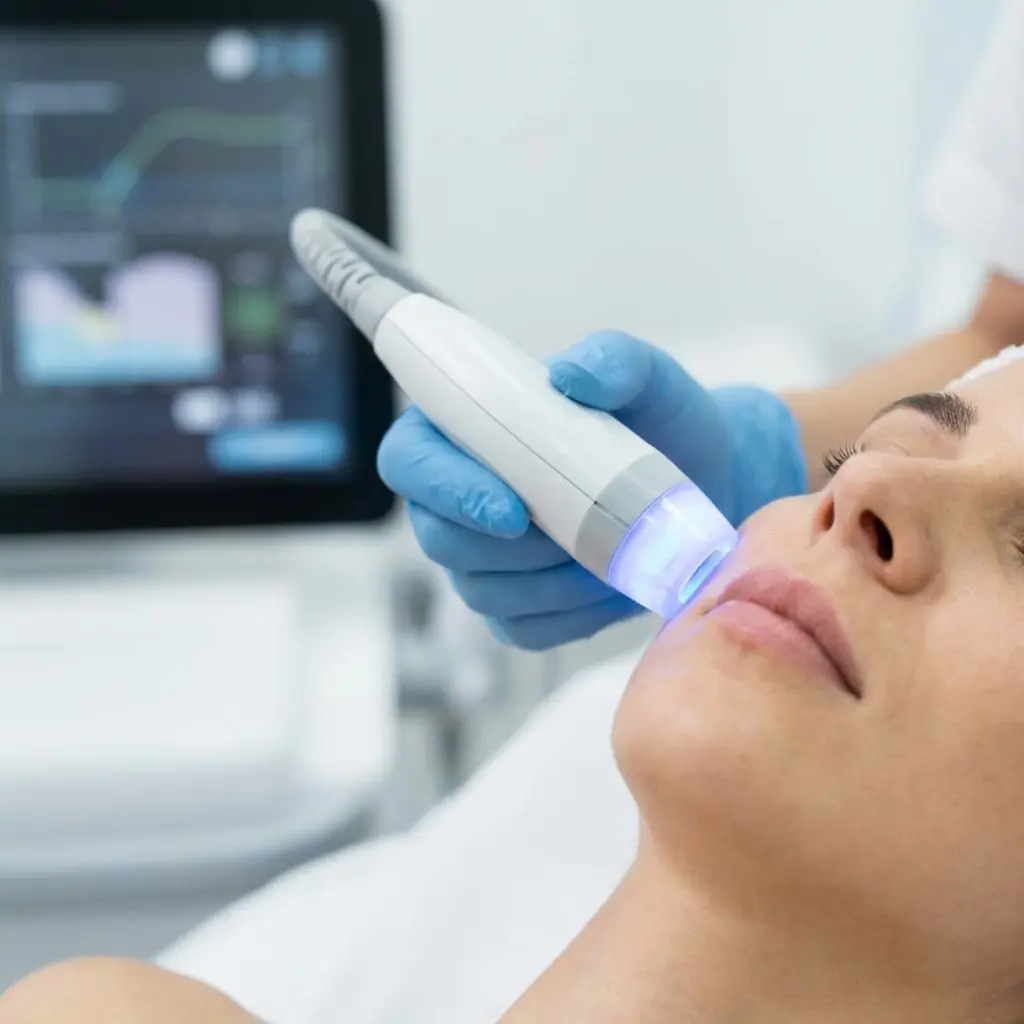
HIFU works by delivering focused ultrasound energy deep into your skin layers. The technology targets specific depths without damaging the surface.
The ultrasound energy creates controlled heat points in the tissue. Your body responds by producing new collagen. This is the same protein that gives young skin its firmness.
The first dermatologic use of HIFU appeared in 2008. The FDA approved it for browlifting in 2009. Since then, the technology has expanded to treat the lower face, neck, and areas around the eyes.
Here’s what makes HIFU different from other treatments:
The energy bypasses your skin’s surface entirely. It reaches the SMAS layer, the same tissue surgeons target during traditional facelifts. This depth of treatment is what separates HIFU from surface-level procedures.
A 2025 systematic review analyzed 45 clinical trials and found improvements in skin laxity ranging from 18% to 30%. These results appeared in the lower face, neck, and periorbital regions.
The numbers matter because they come from controlled studies, not marketing claims.
What This Means for You: HIFU targets the same deep tissue layer as surgical facelifts but without incisions. Clinical evidence from 45 studies confirms 18-30% improvements in skin laxity across multiple treatment areas.
HIFU Treatment Timeline: When Will You See Results?
You won’t walk out of your appointment looking dramatically different.
HIFU works gradually. Some people notice subtle tightening within a few days. This early change comes from immediate collagen contraction.
But the real results develop over months.
Your realistic timeline looks like this:
- Days 1-7: Possible mild swelling or tenderness. Some people see minimal immediate tightening.
- Weeks 2-8: Your body starts producing new collagen. Changes are subtle but building.
- Months 2-3: Most noticeable improvements appear. Your skin looks firmer, more lifted.
- Month 6: Peak results. This is when you see the full effect of new collagen production.
- 12-18 months: Results typically last this long before you might consider maintenance treatment.
A study of Korean women with eyelid laxity found that 76% of patients reported clinical improvement. Clinicians recognized improvement in 59% of cases. The gap between patient perception and clinical measurement is normal.
Your experience sits somewhere in that range.
Bottom Line: HIFU results build gradually over 6 months. Expect subtle improvements starting at 2-3 months, with peak results visible by month 6. Effects last 12-18 months before maintenance is needed.
Is HIFU Safe? What Clinical Research Shows
Every cosmetic procedure carries risk. HIFU’s safety profile is well-documented because the technology has been studied extensively.
Fewer than 5% of patients reported side effects in clinical trials. When side effects occurred, they were temporary: redness, swelling, mild discomfort.
These reactions typically resolve within hours to days. No medical intervention required.
Common temporary effects include:
- Redness that fades within a few hours
- Slight swelling in treated areas
- Tingling or tenderness for a day or two
- Temporary numbness that resolves on its own
Serious complications are rare when the treatment is performed correctly by trained practitioners.
This is why your choice of clinic matters more than the price you pay.
Safety Summary: HIFU has a strong safety profile with fewer than 5% of patients experiencing temporary side effects. Serious complications are rare when performed by trained practitioners using proper protocols.
HIFU vs Surgical Facelift: Comparing Your Options
You’re probably weighing HIFU against a surgical facelift.
The cost difference is significant. In the UK, a full face and neck HIFU treatment ranges from £700 to £2,000. A surgical facelift costs £10,000 to £30,000.
But cost isn’t the only factor.
HIFU offers several practical advantages:
No downtime. You can return to your daily activities immediately. No recovery period, no time off work, no visible signs that you’ve had a procedure.
The treatment takes one to two hours. You schedule it during lunch, attend in the afternoon, and go about your evening.
Surgery requires weeks of recovery. Visible bruising, swelling, and restrictions on your activities. The commitment is substantial.
HIFU provides moderate improvement. Surgery delivers more dramatic change. Your choice depends on your goals and what you’re willing to invest in time, money, and recovery.
For many London and Essex professionals, the no-downtime aspect makes HIFU the practical choice.
Key Comparison: HIFU costs £700-£2,000 with zero downtime versus £10,000-£30,000 for surgery requiring weeks of recovery. HIFU offers moderate improvement, surgery provides dramatic change. Choose based on your goals, budget, and lifestyle.
How to Evaluate a HIFU Clinic: Questions That Matter
Not all HIFU treatments are equal. The technology varies. The practitioner’s experience matters. The clinic’s protocols affect your safety and results.
Ask these questions during your consultation:
About the practitioner:
- What is your training and certification in HIFU treatment?
- How many HIFU procedures have you performed?
- Can I see before-and-after photos of your actual patients?
About the technology:
- Which HIFU device do you use?
- Is it FDA-approved or CE-marked?
- How is the device maintained and calibrated?
About the treatment plan:
- Am I a good candidate for HIFU based on my skin condition?
- What specific areas will you treat?
- How many sessions do you recommend?
- What results can I realistically expect?
About safety and aftercare:
- What are the potential risks for someone with my skin type?
- What should I do if I experience side effects?
- Do you provide follow-up appointments?
- What is your protocol if results don’t meet expectations?
A reputable clinic welcomes these questions. They provide detailed answers. They never pressure you to book immediately.
If a clinic dismisses your concerns or rushes through the consultation, walk away.
Red Flags: When to Keep Looking
Some warning signs indicate a clinic prioritizes sales over your safety.
Watch for these red flags:
Unrealistic promises. No treatment delivers “instant results” or “looks better than surgery.” If the marketing sounds too good, it probably is.
Pressure tactics. “Book today for a special price” or “limited slots available” are sales techniques. Quality clinics don’t need to pressure you.
Lack of consultation. Every person’s skin is different. A clinic that offers treatment without a thorough assessment is cutting corners.
No clear pricing. Reputable clinics provide transparent pricing during consultation. Hidden fees or vague cost estimates suggest problems.
Missing credentials. Practitioners should readily share their qualifications. If they’re evasive about training or certification, that’s a problem.
Poor communication. You should feel heard and informed. If the practitioner doesn’t listen to your concerns or explain the procedure clearly, find someone who will.
What Shumaila’s Offers: A Research-Backed Approach
Shumaila’s provides HIFU treatment in London with a focus on informed decision-making.
The consultation process starts with understanding your specific concerns. What bothers you about your skin? What results do you hope to achieve? What’s your timeline?
You’ll receive a realistic assessment of what HIFU can do for your particular skin condition. Not everyone is an ideal candidate. A good clinic tells you this upfront.
The treatment plan is customized based on your skin type, the areas you want to address, and your aesthetic goals. This isn’t a one-size-fits-all approach.
You can book a consultation to discuss whether HIFU is right for you. The consultation gives you the information you need to make an informed choice.
Making Your Decision: What Matters Most
You’ve done your research. You understand the science, the timeline, and the realistic expectations.
Now you need to choose a clinic.
Prioritize these factors:
Safety first. The clinic’s protocols, the practitioner’s training, and the quality of equipment matter more than price.
Realistic expectations. Choose a clinic that sets honest expectations rather than promising dramatic transformations.
Communication quality. You should feel comfortable asking questions and confident in the answers you receive.
Location and convenience. For London and Essex residents, finding a clinic that fits your schedule and location makes the process easier.
Aftercare support. The relationship doesn’t end when you leave the appointment. Choose a clinic that provides follow-up care.
HIFU treatment offers a non-invasive option for skin tightening. The research shows moderate improvements with minimal risk when performed correctly.
Your results depend on choosing the right clinic, having realistic expectations, and following proper aftercare.
Take your time with this decision. Schedule consultations with multiple clinics if needed. Ask all your questions. Make the choice that feels right for your situation.
Your skin. Your timeline. Your decision.
Book your consultation at Shumaila’s to start the conversation about whether HIFU treatment aligns with your goals.