


Look. Feel. Live. Better
Keloid Scar Removal Surgery
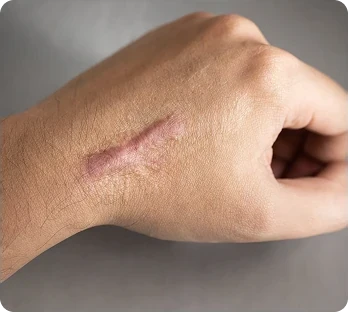
| Details |
|---|
| Surgery Time |
| Return to Work |
| Full Recovery |
| Anaesthesia |
| Location |
| Information |
|---|
| 1 - 2 hours |
| 3 - 5 days |
| 4 - 6 weeks |
| Local Anaesthetic |
| London, Essex, Hertfordshire |
Happy Customer Reviews

Certified & Experienced Doctors
Safe and Surgically Proven
Keloid Scar Removal Surgery is a well-established procedure when performed by qualified surgeons under UK clinical governance.
At Shumaila’s London, all procedures are delivered by GMC-registered surgeons in CQC-registered environments, with individualised consent and aftercare.
It’s safe because
And effective, due to:
Excellent 4.9 out of 5


Experts Guaranteed
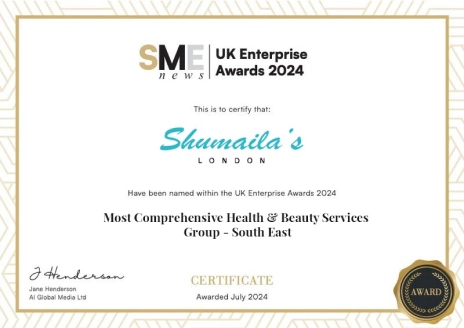
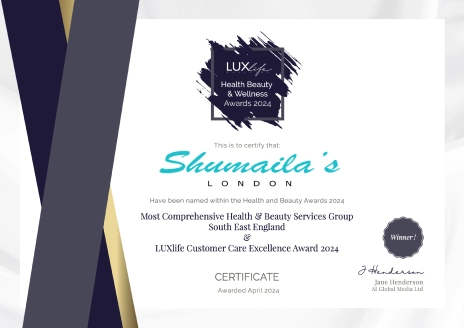
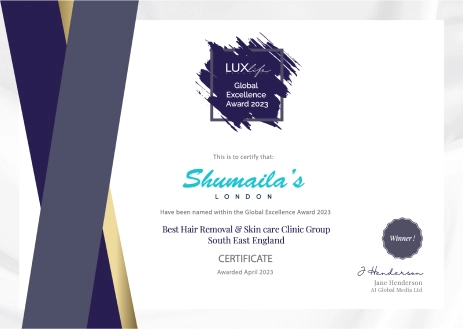
Shumaila’s world class team of doctors span from the UK to Eruope

Clinics
10+
Experts
10+
Experience
35+ years


Expect results in
Weeks 1–2 (Surgical Healing)
The physical bulk of the keloid is immediately gone. The focus is on allowing the surgical incision to heal cleanly without tension or infection.
Weeks 3–8 (Active Suppression)
During this critical window, you will receive your scheduled steroid/5-FU injections. The new scar will look pink but should remain flat and soft.
Months 3–6 (Fading)
The active suppression phase concludes. The scar tissue stabilises, and the redness begins to fade to a paler tone closer to your natural skin colour.
Months 6–12 (Final Maturation)
The scar fully matures. It remains flat and blends much better with the surrounding skin. Any itching or discomfort from the original keloid is permanently resolved.
Ready to start?
Choose Shumaila’s
Watch our video
Post-Operative Aftercare
Strict adherence to aftercare and follow-up appointments is critical to preventing keloid regrowth. Follow these clinical guidelines:
Frequent Asked Questions
Yes, but surgical excision alone is not enough. Because keloids are caused by an overactive healing response, cutting them out without follow-up treatment often causes them to grow back larger. At Shumaila’s, we combine surgical excision with post-operative steroid and 5-Fluorouracil (5-FU) injections to suppress the scar tissue and prevent regrowth.
A hypertrophic scar is raised and red but stays within the boundaries of the original wound. A keloid scar grows beyond the original wound, spreading into the surrounding healthy skin. Keloids are also more likely to be itchy, painful, and resistant to simple treatments.
For small or new keloids, a course of steroid and 5-FU injections is often enough to flatten the scar. However, for large, mature, or highly raised keloids (such as those on the earlobes or chest), surgical excision followed by a strict injection protocol is the most effective approach.
The surgery is performed under local anaesthetic, so you will not feel any pain during the procedure. You may experience mild soreness for a few days afterwards, which can be managed with standard painkillers.
This depends on your skin type and how aggressively your body produces scar tissue. Most patients require a course of 3 to 6 injection sessions, spaced 4 to 6 weeks apart, starting shortly after the surgical excision.
The NHS generally considers keloid scar removal to be a cosmetic procedure and rarely funds it, unless the scar is causing severe functional impairment or extreme psychological distress. Most patients opt for private treatment to access the combined surgery and injection protocols.